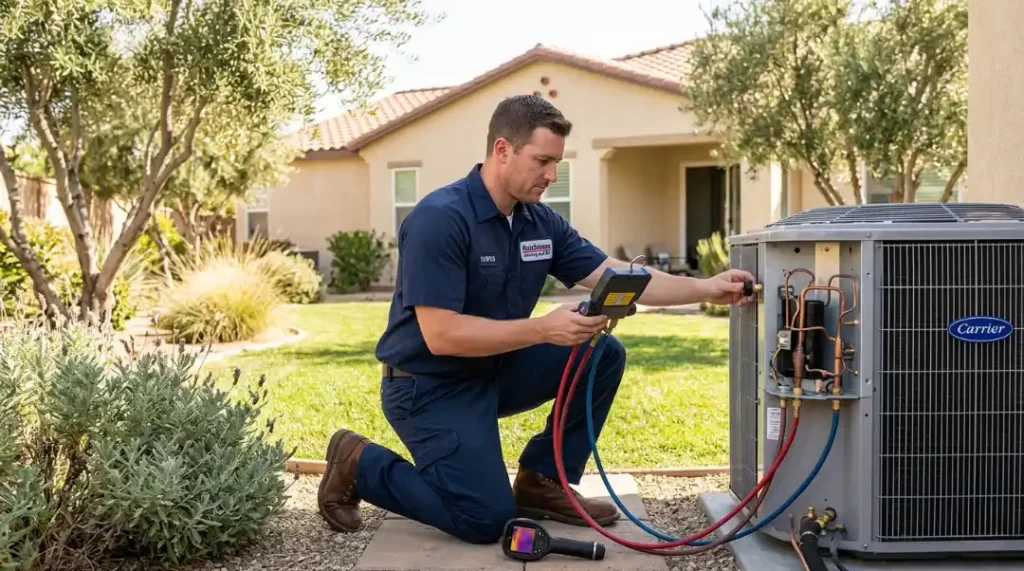
If your air conditioner has ever quit on the hottest day of the year, you already know the feeling: the sudden silence where the hum used to be, the temperature creeping up room by room, and the scramble to find someone who can come out today. Most of the time, that breakdown didn’t happen overnight. It built up slowly, through dust, neglect, and small issues that never got checked. That’s exactly what AC maintenance is designed to prevent.
At Hutchinson Heating and Air, we’ve walked into more than a few homes where a $150 maintenance visit could have prevented a $1,500 repair bill. This guide breaks down exactly what AC maintenance means, what it includes, and how you can stay ahead of problems before they turn into emergencies.
Key Takeaways
- AC maintenance is routine, preventive care for your cooling system, not a repair after something breaks.
- A well-maintained system runs more efficiently, lasts longer, and keeps your indoor air cleaner.
- Most manufacturers require proof of regular maintenance to keep your warranty valid.
- Homeowners can handle basic tasks like filter changes, but coil cleaning, refrigerant checks, and electrical work need a trained technician.
- Most systems should get a professional tune-up once a year, ideally in spring before the heat sets in.
What Is AC Maintenance?
AC maintenance is the routine care performed on an air conditioning system to keep it running safely, efficiently, and reliably. It includes tasks like cleaning coils, checking refrigerant levels, inspecting electrical components, and replacing filters all done on a regular schedule, whether or not the system is showing problems.
This is the part that trips people up: maintenance and repair are not the same thing. Repair happens after something has already gone wrong: a capacitor fails, a coil freezes, the system stops cooling. Maintenance happens before that point. It’s the inspection and upkeep that catches a worn part or a dirty coil while it’s still a minor issue, rather than letting it turn into a breakdown. At Hutchinson Heating and Air, we tell customers to think of it the way you’d think about an oil change versus an engine rebuild; one is routine upkeep, the other is what happens when routine upkeep gets skipped.
Why AC Maintenance Matters
Skipping maintenance doesn’t just risk a breakdown; it quietly costs you money and comfort every single day the system runs.
Lower Energy Bills
A dirty coil or a clogged filter forces your system to work harder to produce the same amount of cooling. Air conditioner maintenance keeps airflow and heat transfer working the way they were designed to, which means your system isn’t burning extra electricity just to keep up. Over a full cooling season, that difference shows up clearly on your utility bill.
Longer System Lifespan
Most central air conditioners are built to last 12 to 17 years, but that number assumes the system is properly cared for. Neglected systems often fail years earlier because dirt, friction, and electrical strain wear down components faster than they should. Regular maintenance of AC systems is one of the simplest ways to protect that investment and avoid replacing a unit before its time.
Warranty Compliance
Here’s something a lot of homeowners don’t find out until it’s too late: many manufacturers require documented annual maintenance to keep the parts warranty valid. If a compressor fails at year eight and you can’t show service records, you could be paying full price for a repair that should have been covered. Keeping up with air conditioner maintenance and service isn’t just good practice, it’s often a condition of your warranty.
Better Indoor Air Quality
Your AC system doesn’t just cool air, it circulates it. A unit with dirty coils, clogged filters, or a neglected drain line can become a breeding ground for mold, dust, and bacteria, all of which end up in the air you breathe. Routine AC maintenance keeps those components clean, which matters even more if anyone in your home deals with allergies or respiratory issues.
Types of AC Systems & How Maintenance Differs
Not every cooling system is maintained the same way. The right approach depends on what kind of unit you have.
Central AC
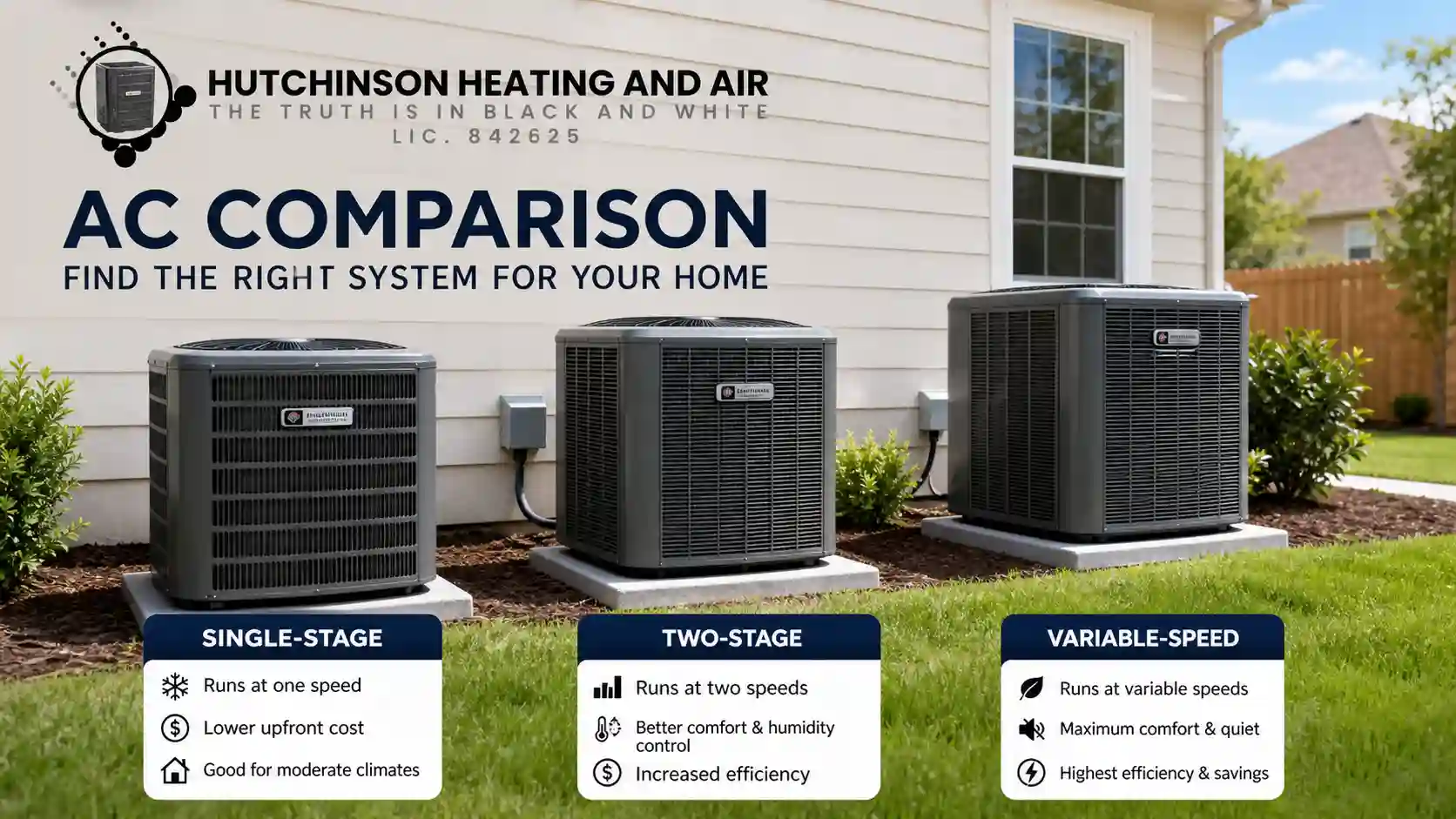
Central air conditioning systems use ductwork to distribute cooled air throughout the home. Maintenance here focuses on the outdoor condenser unit, the indoor evaporator coil, the ductwork, and the filter. Because these systems handle the largest cooling load in a home, they typically need the most thorough annual inspection.
Split/Ductless (Mini-Split)
Ductless systems use individual indoor units connected to an outdoor compressor, without ductwork. Maintenance leans more heavily on cleaning the indoor unit’s filters and coils directly, since there’s no duct network to inspect. These filters tend to need attention more often, especially in homes with pets or higher dust levels.
Window/Portable Units
These smaller units are the most DIY-friendly to maintain. Filters should be cleaned every few weeks, and the unit benefits from periodic coil cleaning and drainage checks. They don’t typically require the same professional tune-up schedule as central or ductless systems, though units showing weak cooling or odd noises should still be inspected.
What Does Professional AC Maintenance Include?
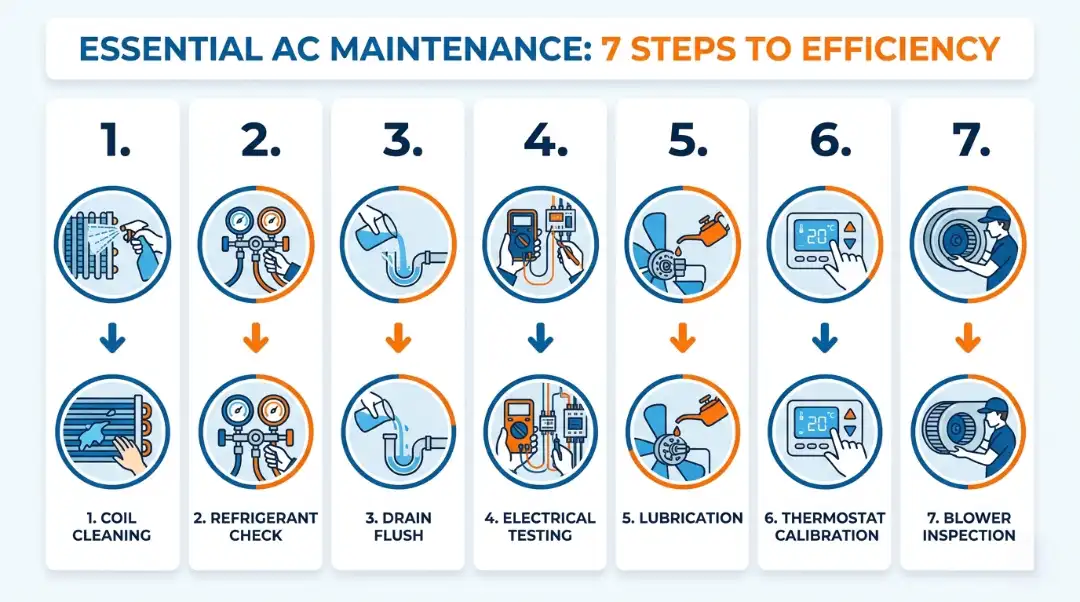 When a technician performs AC maintenance, they’re working through a specific set of checks that go well beyond what most homeowners can do on their own.
Evaporator and Condenser Coil Cleaning
Coils collect dust, pollen, and grime over time, which insulates them and reduces their ability to transfer heat. Cleaning both coils restores the system’s cooling efficiency and reduces strain on the compressor.
Refrigerant Level Check
Refrigerant isn’t something you add like fuel, it’s a sealed system, and low levels almost always mean a leak somewhere. A technician checks pressure levels and looks for signs of leaks, since running low on refrigerant can damage the compressor over time.
Condensate Drain Line Flush
The drain line carries moisture away from your system. Algae, sludge, and debris can clog it over time, which leads to water backup, pan overflow, and potential water damage. Flushing the line keeps it clear.
Electrical Connection Tightening and Testing
Loose or corroded electrical connections are one of the most common causes of AC failure and can pose a safety risk. A technician tightens connections and tests components like capacitors and contactors for wear.
Lubrication of Moving Parts
Motors and other moving components rely on lubrication to reduce friction. Without it, parts wear out faster and the system has to work harder, which increases energy use and noise.
Thermostat Calibration
A thermostat that’s reading temperature incorrectly can cause your system to run longer than necessary or cycle on and off too frequently. Calibration makes sure the thermostat and the system are actually in sync.
Blower Motor and Wheel Inspection
The blower is responsible for moving air through your home. A technician checks for dust buildup, wear, and proper operation, since a struggling blower motor directly affects airflow and comfort.
DIY AC Maintenance: A 5-Step Routine for Homeowners
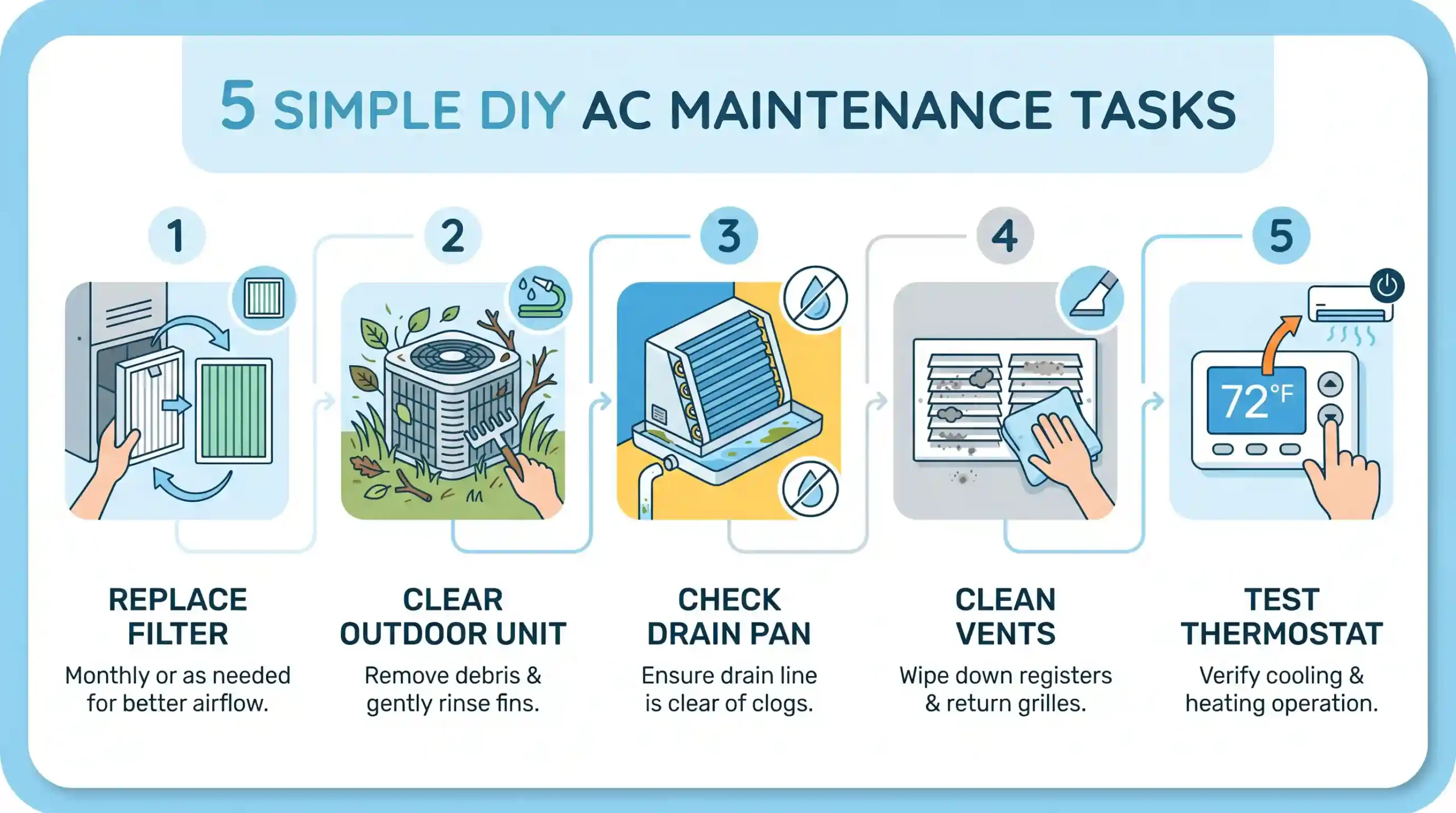 Between professional visits, there’s a lot you can do yourself to keep your system in good shape.
Step 1: Clean or Replace Air Filters Monthly
This is the single most impactful thing you can do. A dirty filter restricts airflow and forces the system to work harder. Check filters monthly, and replace or clean them more often if you have pets or live somewhere dusty.
Step 2: Clear Debris Around the Outdoor Unit
Leaves, grass clippings, and overgrown plants around your outdoor condenser block airflow and reduce efficiency. Keep at least two feet of clearance on all sides.
Step 3: Check the Condensate Drain Pan
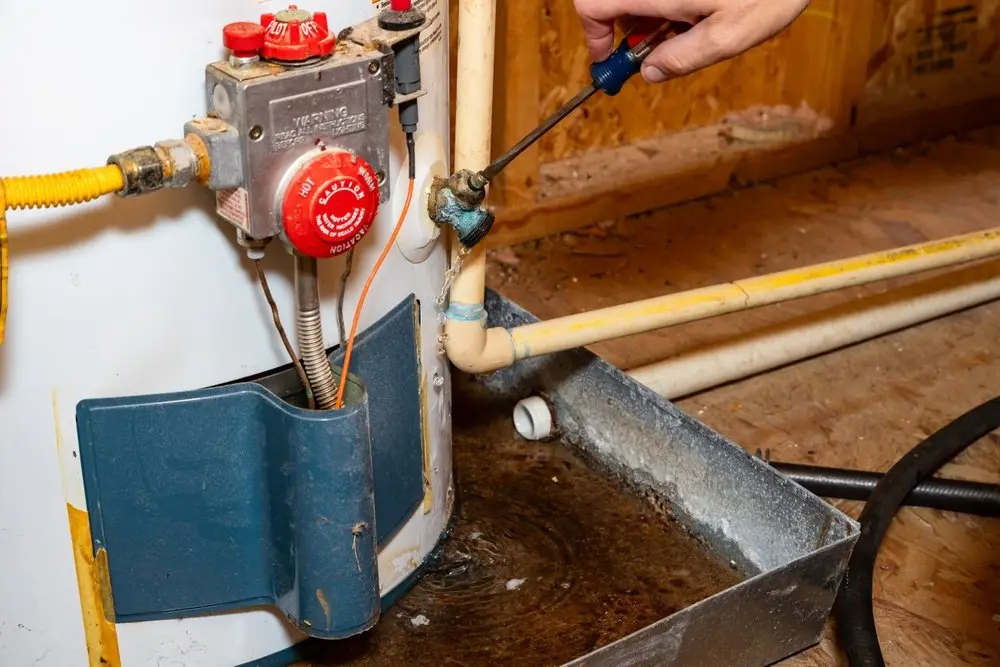
Look for standing water, algae buildup, or signs of clogging. Catching this early can prevent water damage and the kind of issues that turn into a service call.
Step 4: Check Vents and Registers
Make sure furniture, rugs, and curtains aren’t blocking your supply and return vents. Blocked vents reduce airflow and make your system work harder to maintain temperature.
Step 5: Test Your Thermostat
Set your thermostat a few degrees below room temperature and confirm the system kicks on, cools properly, and shuts off as expected. This simple test can catch a developing problem before it becomes a no-cool emergency.
DIY vs. Professional Maintenance: What You Can (and Can’t) Do Yourself
| Task | DIY-Friendly? | Why |
| Filter cleaning/replacement | Yes | No tools or training required |
| Clearing outdoor debris | Yes | Simple visual and physical task |
| Checking drain pan | Yes | Easy to inspect, no disassembly needed |
| Coil cleaning | No | Requires proper cleaning agents and care around delicate fins |
| Refrigerant check/recharge | No | Requires certification and specialized equipment by law |
| Electrical testing | No | Risk of shock; requires diagnostic tools |
| Thermostat calibration | Sometimes | Basic models are DIY-friendly; smart thermostats may need a pro |
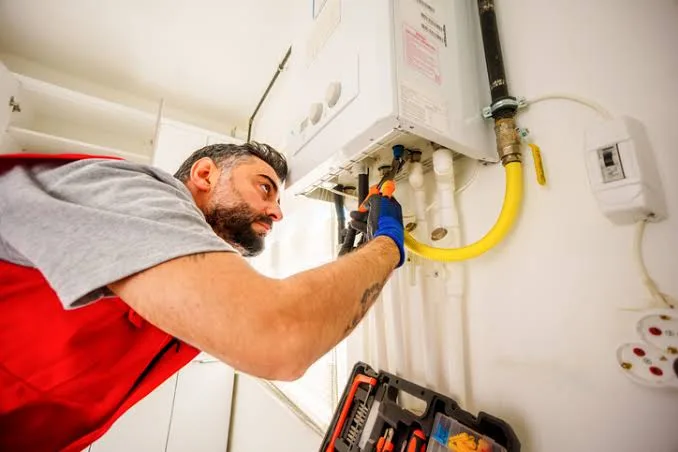
The general rule: if it involves opening the system, working with refrigerant, or touching electrical components, it’s a job for a licensed technician.
How Often Should You Schedule AC Maintenance?
Quick answer: Most homes need one professional AC maintenance visit per year, ideally in spring before peak cooling season. Homes in hot, dusty, or high-humidity climates or those running the system daily for months at a time often benefit from a second visit in fall to check the system before it sits idle.
If you have pets, allergy sufficiency concerns, or a system that’s more than 10 years old, leaning toward twice-yearly maintenance is a reasonable extra step.
Signs Your AC Needs Maintenance Now
Don’t wait for your scheduled visit if you’re noticing any of these warning signs:
- Weak or inconsistent airflow from vents
- Strange noises like grinding, squealing, or banging
- Ice forming on the indoor coil or refrigerant lines
- A noticeable spike in your energy bill with no change in usage
- Musty or odd smells when the system runs
- The system short-cycling (turning on and off frequently)
- Warm air blowing when it should be cold
Any one of these can point to a developing issue that maintenance or a repair needs to address before it gets worse.
Average Cost of AC Maintenance
A standard professional AC maintenance visit typically falls between $75 and $200, depending on your location, system type, and what’s included in the service. Some companies offer maintenance plans that bundle two visits a year for a flat annual fee, which often works out cheaper than paying per visit and comes with the added benefit of priority scheduling during peak season.
Factors that affect cost include system size, accessibility of the unit, whether ductwork inspection is included, and regional labor rates. While it’s tempting to skip this expense, it’s worth comparing against the cost of an emergency repair; a failed compressor alone can run well over $1,000.
Common Mistakes People Make With AC Maintenance
After years in this industry, the same avoidable mistakes show up again and again:
- Waiting until the system fails. Maintenance is meant to be proactive. Scheduling it only after something breaks defeats the purpose.
- Ignoring the filter. It sounds too simple to matter, but a neglected filter is behind a huge share of efficiency complaints and breakdown calls.
- Skipping maintenance because the system “seems fine.” Many issues, like early refrigerant leaks or worn electrical connections, aren’t noticeable until they cause a real problem.
- Forgetting documentation. Without service records, you may not be able to claim warranty coverage even if the repair would otherwise qualify.
- Trying DIY refrigerant work. Beyond the legal restrictions, mishandling refrigerant can damage the compressor and create safety hazards.
Keep Your AC Running Efficiently All Year
AC maintenance isn’t a one-time task, it’s an ongoing relationship between you, your system, and the people who service it. The homeowners who avoid mid-summer breakdowns aren’t the ones with newer units; they’re the ones who stay consistent with filter changes, keep an eye out for warning signs, and bring in a professional once a year before the heat hits. If you’re in the Temecula or Murrieta area and it’s been a while since your last tune-up, our AC Maintenance Temecula & Murrieta service is a straightforward way to get your system checked and ready before the next heat wave.
Conclusion
Staying ahead of AC problems comes down to consistency: a clean filter here, a quick inspection there, and a professional tune-up once a year. If it’s been longer than 12 months since your system was last serviced, don’t wait for a hot afternoon to find out something’s wrong. Contact us at Hutchinson Heating and Air to schedule your AC maintenance and keep your system running the way it should, all season long.
FAQs
What does a standard AC maintenance visit include?
A standard visit typically covers coil cleaning, refrigerant level checks, condensate drain flushing, electrical connection testing, lubrication of moving parts, and thermostat calibration. The technician will also do a general inspection to catch any early signs of wear before they become bigger problems.
Can I do AC maintenance myself?
You can handle basic tasks like filter cleaning, clearing debris around the outdoor unit, and checking the drain pan. Anything involving refrigerant, electrical components, or internal coil cleaning should be left to a licensed technician for safety and warranty reasons.
How much does AC maintenance typically cost?
Most professional maintenance visits cost between $75 and $200, depending on your system and location. Many companies also offer annual maintenance plans that include two visits a year, which can be more cost-effective than paying per visit.
Does skipping maintenance void my warranty?
In many cases, yes. Most manufacturers require proof of regular professional maintenance to keep the parts warranty active, so skipping it could leave you paying out of pocket for repairs that would otherwise be covered.
What happens if I never service my AC?
Without regular maintenance of your AC system, efficiency drops, energy bills climb, and small issues like dirty coils or loose electrical connections are left to worsen. Over time, this significantly increases the risk of a major breakdown and can shorten the system’s overall lifespan by years.