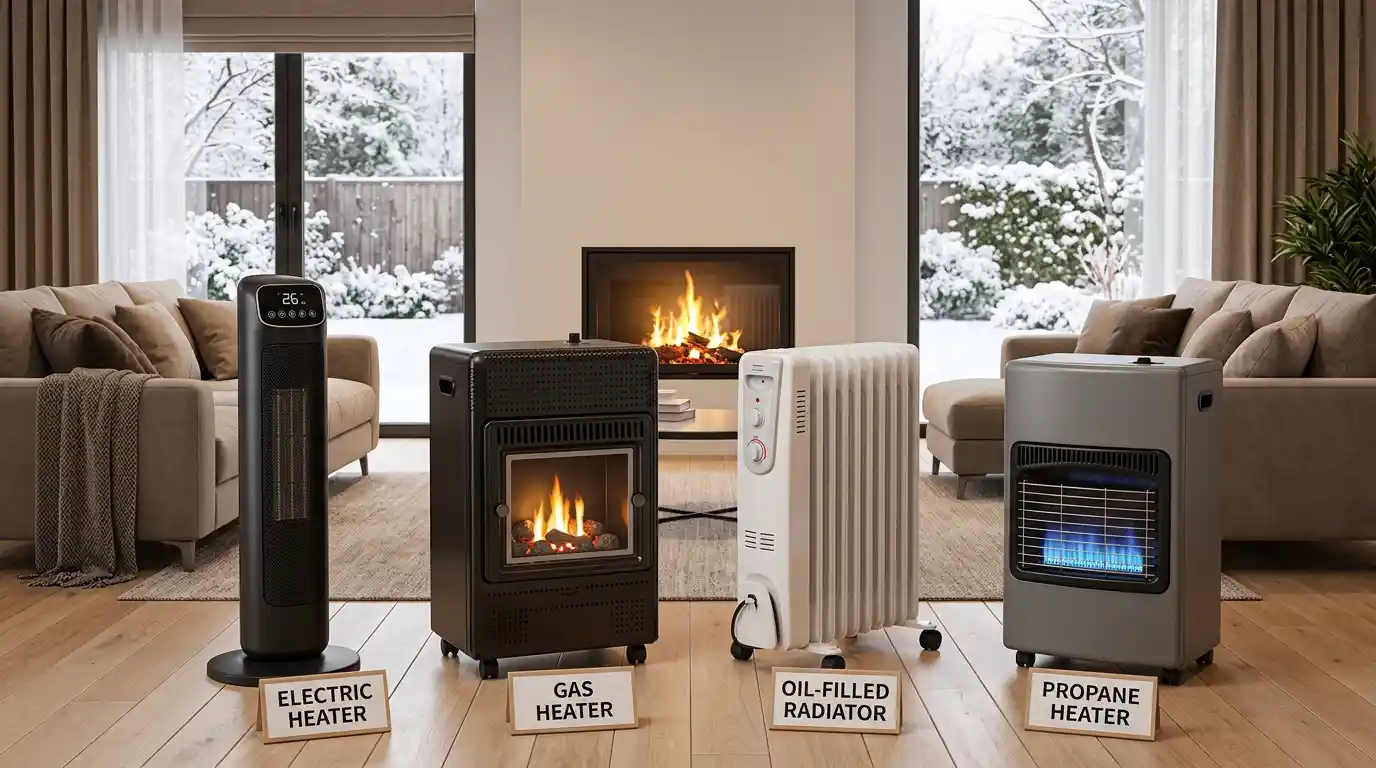
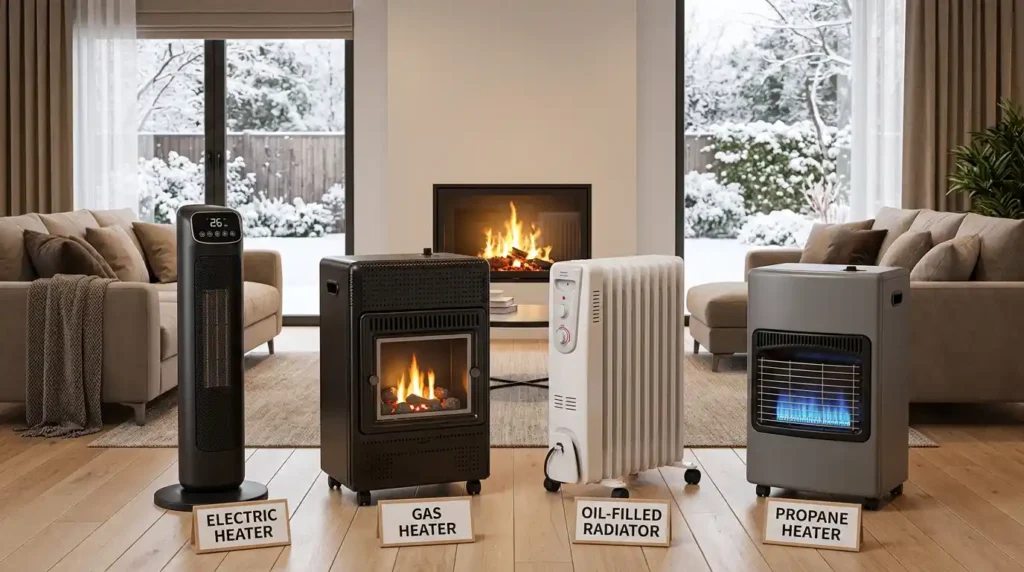
Cold weather can make your home uncomfortable if you do not have the right heating system. Choosing the best heater is important because it affects comfort, energy efficiency, and monthly utility costs. Many homeowners researching 4 Types of Heaters | Which One Is The Best want to understand which option fits their home and budget.
At Hutchinson Heating and Air, we help homeowners compare electric, gas, oil-filled, and propane heaters to find the right solution. Each heater offers different benefits, heating performance, and operating costs. This guide explains the most common heater types and helps you choose the best heating option for your needs.
Understanding Different Types of Home Heaters
Not all heaters are designed for the same purpose. Some are built to heat an entire home, while others are intended to warm a single room or workspace.
Central Heating vs Portable Heaters
Central heating systems distribute heat throughout the entire house using ductwork or other distribution methods. Portable heaters focus on heating a specific area and are often used as supplemental heating sources.
Examples include:
- Gas furnaces for whole-home heating
- Electric heaters for individual rooms
- Oil-filled radiators for quiet supplemental heating
- Propane heaters for garages, workshops, and outdoor spaces
Understanding these differences is important when evaluating the different types of heaters for homes.
What Makes a Heater Efficient?
An efficient heater converts as much energy as possible into usable heat while minimizing waste. Factors that affect efficiency include:
- Energy source
- Heater design
- Room insulation
- Maintenance condition
- Thermostat settings
Factors That Affect Heating Performance
Even the best heater may perform poorly if your home has:
- Air leaks around doors and windows
- Poor insulation
- Improper heater sizing
- Dirty filters or neglected maintenance
Type #1: Electric Heaters
Electric heaters are among the most common heater types found in homes today.
How Electric Heaters Work
Electric heaters use electrical resistance elements to generate heat. When electricity passes through these elements, heat is produced and distributed into the room through convection or fans.
Advantages of Electric Heaters
Pros
- Easy installation
- No fuel storage required
- Quiet operation
- Available in many sizes
- Suitable for indoor use
Cons
- Higher operating costs in some regions
- Less effective for heating large homes
- Dependent on electricity supply
Best Uses for Electric Heaters
Electric heaters are ideal for:
- Bedrooms
- Home offices
- Apartments
- Small living spaces
- Supplemental heating
They are often considered one of the easiest different types of heaters for homes because they require little setup.
Energy Efficiency and Operating Costs
Most electric heaters convert nearly all electricity into heat. However, electricity rates often determine actual operating costs. In areas with expensive electricity, running costs can become significant during winter.
Most Efficient Electric Heater for Home Use
Modern infrared electric heaters and ceramic heaters are generally considered among the most efficient electric heating options. Many include programmable thermostats and energy-saving modes that help reduce electricity consumption.
Type #2: Gas Heaters
Gas heaters remain one of the most popular solutions for whole-home heating.
How Gas Heaters Work
Gas heaters burn natural gas to produce heat. The heat is transferred through a heat exchanger and distributed throughout the home.
Advantages of Gas Heaters
Pros
- Fast heating performance
- Lower operating costs in many regions
- Effective for large homes
- Reliable whole-home heating
Cons
- Higher installation costs
- Requires gas connections
- Regular maintenance is important
- Potential safety concerns if neglected
Best Applications for Gas Heating
Gas heating works particularly well for:
- Large homes
- Multi-story houses
- Cold climates
- Families seeking lower long-term heating costs
Running Costs and Efficiency
Modern gas furnaces can achieve efficiency ratings exceeding 90 percent. While installation costs may be higher, many homeowners recover those costs through lower monthly energy bills.
Best Gas Heater Options
High-efficiency condensing furnaces are often considered the best gas heating option for homeowners seeking strong performance and long-term savings.
If you are considering upgrading your heating system, professional Heater Installation Temecula services can help ensure proper sizing and installation for maximum efficiency.
Type #3: Oil-Filled Heaters
Oil-filled heaters are known for their steady and quiet heating performance.
How Oil Heaters Work
These heaters contain sealed oil that is heated internally by electric elements. The heated oil retains warmth and gradually releases it into the surrounding area.
Advantages of Oil Heaters
Pros
- Quiet operation
- Long-lasting heat retention
- No exposed heating elements
- Good for bedrooms and living spaces
Cons
- Slower heating response
- Heavy and less portable
- Not ideal for heating large areas
Energy Consumption
Oil-filled heaters continue releasing heat even after cycling off. This feature can improve comfort while reducing frequent energy usage.
Best Rooms for Oil Heaters
Oil-filled heaters work well in:
- Bedrooms
- Nurseries
- Living rooms
- Small offices
When comparing a radiator heater vs space heater, oil-filled radiators generally provide longer-lasting heat while traditional space heaters warm areas more quickly.
Best Oil Heater Features to Look For
Useful features include:
- Adjustable thermostat
- Tip-over protection
- Multiple heat settings
- Timer controls
- Energy-saving modes
Type #4: Propane Heaters
Propane heaters provide powerful heat and are commonly used where electricity is limited.
How Propane Heaters Work
These heaters burn propane fuel to generate heat. Depending on the model, they can be used indoors or outdoors.
Advantages of Propane Heaters
Pros
- Strong heat output
- Portable operation
- Useful during power outages
- Effective in workshops and garages
Cons
- Requires propane refills
- Ventilation may be necessary
- Fuel costs vary
Indoor vs Outdoor Propane Heaters
Indoor-rated propane heaters include important safety mechanisms. Outdoor units generally produce more heat but should not be used indoors.
Safety Considerations
Always follow manufacturer guidelines and ensure adequate ventilation where required.
Best Uses for Propane Heating
Propane heaters are ideal for:
- Garages
- Workshops
- Cabins
- Outdoor gatherings
- Emergency heating situations
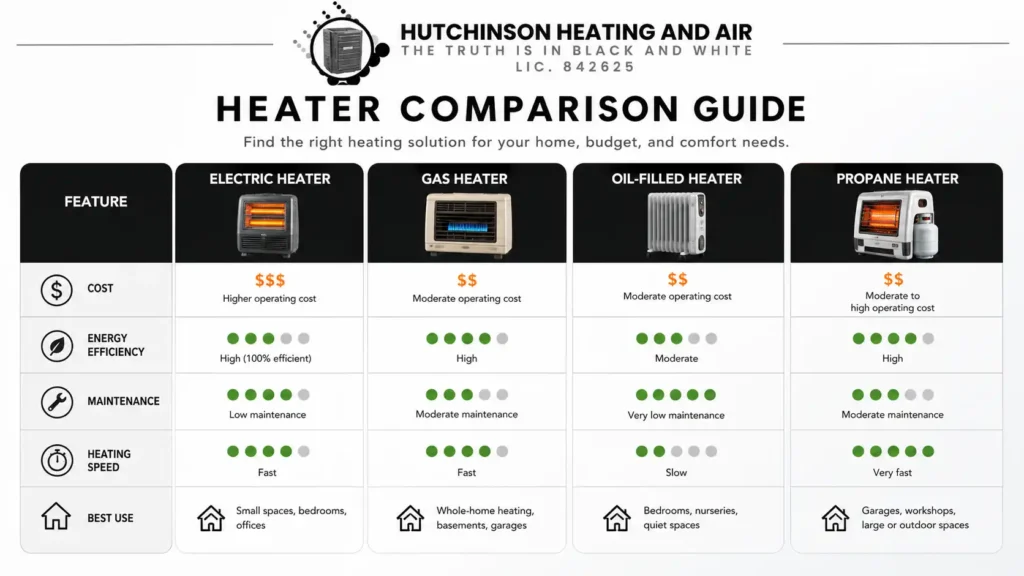
Heater Comparison Table
| Heater Type | Upfront Cost | Running Cost | Energy Efficiency | Maintenance | Best For |
| Electric Heater | Low | Moderate to High | High | Low | Small rooms |
| Gas Heater | High | Low | Very High | Moderate | Whole-home heating |
| Oil-Filled Heater | Moderate | Moderate | High | Low | Quiet indoor heating |
| Propane Heater | Moderate | Variable | Good | Moderate | Garages and backup heating |
Which Heater Is the Most Energy Efficient?
Electric Heater Efficiency
Electric heaters convert nearly all electrical energy into heat, making them highly efficient at the point of use.
Gas Heater Efficiency
Modern gas furnaces often achieve efficiency ratings above 90 percent and remain one of the most efficient options for whole-home heating.
Oil Heater Efficiency
Oil-filled heaters maintain heat longer, reducing temperature fluctuations and improving comfort.
Propane Heater Efficiency
Propane heaters generate significant heat quickly and can be efficient when used for targeted heating applications.
Which Heater Costs the Least to Run?
Monthly Heating Costs Compared
Operating costs depend on local utility rates, climate, and usage habits.
Generally:
- Gas heaters often cost the least to run.
- Oil-filled heaters offer moderate operating costs.
- Propane heaters vary depending on fuel prices.
- Electric heaters may cost more in areas with high electricity rates.
Electricity vs Natural Gas vs Propane
Natural gas is typically the most affordable heating fuel for whole-home applications. Propane and electricity costs can fluctuate depending on market conditions.
Long-Term Ownership Costs
When considering long-term expenses, installation costs, maintenance, repairs, and energy consumption should all be evaluated.
You may also read: When to Replace Hot Water Tank
Which Heater Is Best for Different Situations?
Best Heater for Small Rooms
Electric and oil-filled heaters perform well in smaller spaces.
Best Heater for Large Homes
Gas heating systems are often considered the best heating for a place that requires consistent whole-home comfort.
Best Heater for Garages and Workshops
Propane heaters provide strong heating performance in large open spaces.
Best Heater for Emergency Heating
Portable propane heaters are valuable backup heating options during power outages.
How to Choose the Best Heater for Your Home
Check Heating Capacity and Room Size
Selecting the proper size heater is critical. Oversized and undersized systems both create efficiency problems.
Consider Your Climate
Homes in colder climates often benefit from gas heating systems, while milder regions may find electric options sufficient.
Evaluate Installation Requirements
Some heater types require professional installation, fuel connections, or ventilation systems.
Compare Energy Efficiency Ratings
Look for certified energy-efficient models whenever possible.
Set a Realistic Budget
Consider both upfront costs and long-term operating expenses.
Choose a Trusted Brand
A reputable manufacturer and qualified installer can significantly impact system reliability and performance.
At Hutchinson Heating and Air, we encourage homeowners to evaluate their heating goals before making a final decision.
Common Mistakes to Avoid When Buying a Heater
Choosing the Wrong Size Heater
Improper sizing can lead to uneven temperatures and higher energy bills.
Ignoring Energy Costs
A cheaper heater may become expensive over time if operating costs are high.
Overlooking Safety Features
Safety features such as automatic shutoff and tip-over protection are important.
Focusing Only on Purchase Price
Long-term value matters more than initial purchase cost alone.
Final Verdict | Which Heater Is Best?
There is no single heater that is perfect for every situation.
- Best overall heater: Gas heater
- Best budget-friendly heater: Electric heater
- Best energy-efficient heater: High-efficiency gas heater
- Best heater for large homes: Gas furnace
- Best portable heating solution: Propane heater
The right choice depends on your home, climate, and budget. Understanding the different types of heaters, comparing heater types, and evaluating your comfort goals will help you make the best decision.
Conclusion
Choosing between the 4 Types of Heaters | Which One Is The Best comes down to your home’s needs, energy goals, and budget. Electric heaters offer convenience, gas heaters provide powerful whole-home comfort, oil-filled heaters deliver quiet and steady warmth, and propane heaters excel in portable applications. Understanding these different types of heaters for homes can help you invest in a system that delivers reliable comfort for years to come.
If you need expert guidance, professional maintenance, or Heater Installation Temecula services, contact Hutchinson Heating and Air today. Our team can help you select the right heating solution and keep your home comfortable throughout the heating season.
Frequently Asked Questions
What type of heater is most efficient?
High-efficiency gas furnaces are often considered the most efficient option for whole-home heating. Electric heaters are also highly efficient at converting energy into heat at the point of use.
Are gas heaters cheaper to run than electric heaters?
In many areas, natural gas costs less than electricity, making gas heaters more affordable to operate over time. Actual costs depend on local utility rates.
Which heater is safest for indoor use?
Oil-filled heaters and properly maintained electric heaters are among the safest indoor heating options. Always follow manufacturer recommendations.
What size heater do I need?
The correct heater size depends on room dimensions, insulation levels, ceiling height, and climate conditions. A professional assessment can provide accurate sizing recommendations.
Is a radiator heater better than a space heater?
When comparing a radiator heater vs space heater, radiator heaters provide longer-lasting warmth, while traditional space heaters typically heat rooms faster.