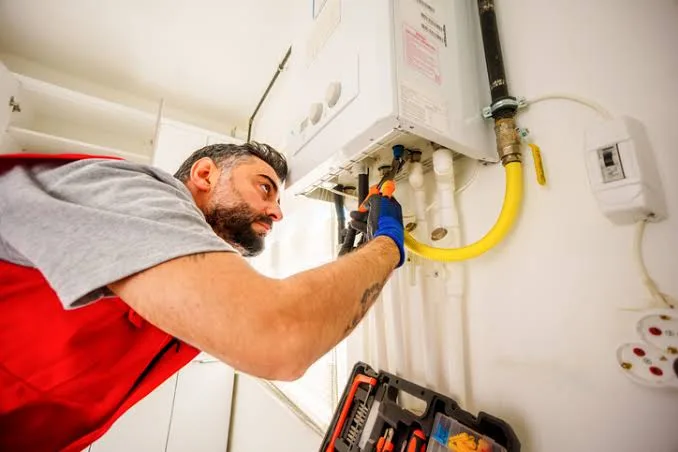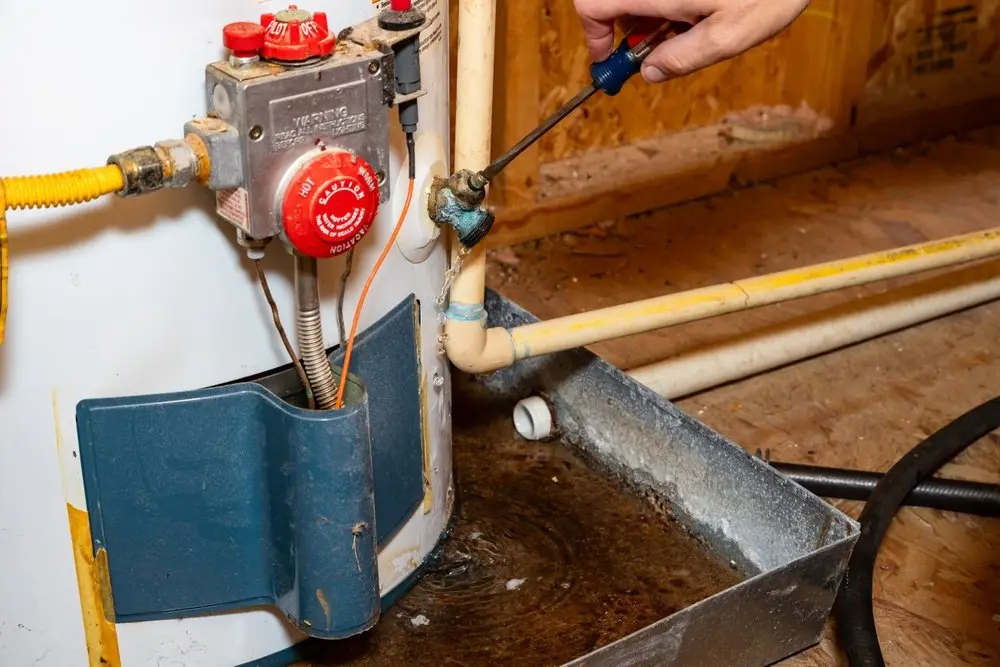
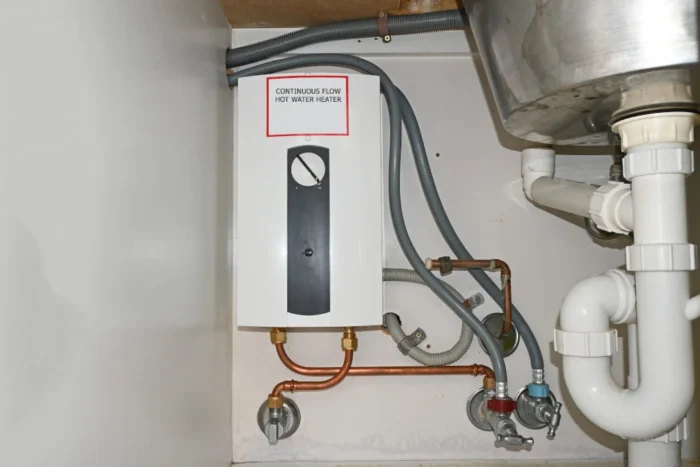
Walk into most Temecula and Murrieta homes with a tankless system, and you’ll find the unit mounted right where the plumber left it, often in plain view on a laundry wall or tucked awkwardly into a kitchen corner. Learning how to hide tankless water heater isn’t just about aesthetics. Done wrong, it can trap heat, block combustion air, or leave a technician unable to reach the shutoff valve during an emergency call.
At Hutchinson Heating and Air, we’ve been called out more than once to fix enclosures that looked great on Pinterest but violated basic clearance rules, since tankless units, despite being smaller and easier to build around, still need proper airflow planning that many DIY remodels skip.
Why Tankless Water Heaters Still Need Careful Concealment
A tankless unit produces heat on demand, which means it draws in air and, for gas models, exhausts combustion byproducts every time hot water runs. Cover it carelessly and you risk two separate problems: restricted airflow that shortens the unit’s life, and blocked access that turns a fifteen-minute repair into a wall-demolition project.
Gas and electric units behave differently here. Gas tankless heaters need a dedicated air supply and a vent path for exhaust gases, so any enclosure has to account for both intake and outflow. Electric units skip the combustion vent entirely, which gives you more flexibility, but they still generate some heat during operation and need clearance so components don’t overheat inside a sealed box. If you’re not sure which type you have, check the unit’s label or ask during your next service visit rather than guessing.
Understanding Your Space, Unit Type, and Clearance Requirements
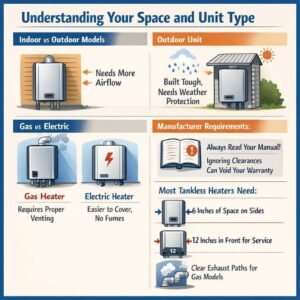
Gas vs Electric Units: Different Ventilation Needs
Gas models typically need a louvered or vented enclosure panel so combustion air keeps moving. Electric models can sit behind a more solid panel, since there’s no exhaust to manage, but the manufacturer’s minimum air gap around the casing still applies. Mixing up these requirements is the single most common mistake we see in enclosure projects that later fail inspection.
Clearance and Code Requirements
Most manufacturers specify around 6 inches of clearance on the sides and roughly 12 to 18 inches in front for service access, though this varies by model and should always be confirmed against your unit’s installation manual. California’s plumbing and mechanical codes, which Temecula and Murrieta building departments enforce locally, require that clearances match manufacturer specifications exactly, not a rounded estimate. If your project involves altering venting, relocating the unit, or building a permanent enclosure, check with your city’s building department first. Some cosmetic covers don’t need a permit, but structural closets or relocations usually do.
Best Methods to Hide a Tankless Water Heater
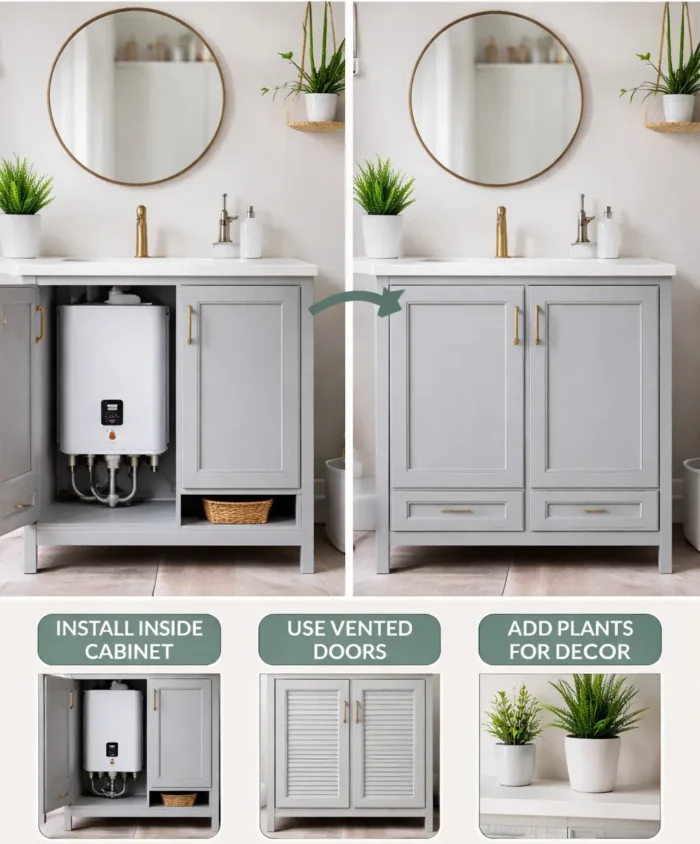
Custom Cabinet Enclosures
A tankless water heater in cabinet form is one of the cleanest looks available, especially when the cabinet face matches surrounding kitchen or laundry cabinetry. Build in a removable or hinged panel, not a permanently sealed front, and include a louvered vent if you’re covering a gas unit. Best for kitchens and laundry rooms. Ventilation note: never use solid, unvented doors on a gas model.
Sliding Panel Systems
Barn-door style or track-mounted panels slide open fully for service, which makes them a strong choice in tight utility closets where a swinging door would hit the unit. Best for utility rooms and garages. Ventilation note: leave a gap at top and bottom even when closed.
Decorative Screens and Room Dividers
A freestanding screen offers zero permanent commitment and works well for renters. It won’t fully disguise the unit but softens its visual presence. Best for laundry rooms and open living areas. Ventilation note: screens with open slats are safer than solid panel screens for gas units.
Curtain and Fabric Solutions
Curtains are inexpensive and quick, but they should hang loosely, never flush against the unit, to avoid trapping heat or fabric fibers near vents. Best for rental units or temporary setups. Ventilation note: avoid heavy, tightly woven fabric on gas models.
Built-In Wall or Recessed Niche Solutions
Recessing the unit into a framed wall cavity creates the most seamless look, but it requires a contractor who understands both framing and venting. This is where a can a tankless water heater be installed in a closet question usually comes up, and the honest answer is yes, provided the closet has adequate combustion air openings and meets the clearance distances listed in the manual. Best for bathrooms and hallways. Ventilation note: closet installations for gas units almost always need engineered air vents, not just a louvered door.
Outdoor Relocation Option
If your indoor space is simply too tight, some tankless models are rated for outdoor installation, which removes the concealment problem entirely. This isn’t right for every home or every unit, and it involves rerouting gas or electric lines, so it’s worth a professional consultation rather than a weekend project.
Room-by-Room Concealment Ideas
Bathroom: Vanity integration works well when there’s enough cabinet depth, and a hinged mirror or artwork panel can cover a small unit without looking out of place. Tile or panel concealment blends the heater into the wall if you’re already remodeling.
Kitchen: Cabinet-matched enclosures are the most popular request we get, since they let the unit disappear into existing millwork.
Laundry or Utility Room: This is usually the easiest room to work with, since function already outweighs aesthetics. Sliding panels and simple cabinets both perform well here.
Garage: Garages have the most flexibility for clearance but the least protection from dust and temperature swings, so a vented cabinet is usually smarter than an open shelf setup.
| Method | Best Room | Approximate Cost Tier |
| Custom cabinet | Kitchen, laundry | Mid to high |
| Sliding panel | Utility, garage | Mid |
| Decorative screen | Laundry, living space | Low |
| Curtain | Any, temporary | Low |
| Recessed wall/closet | Bathroom, hallway | High |
| Outdoor relocation | N/A | High |
Safety and Maintenance Considerations
Ventilation is critical, and it’s the number one reason enclosures fail. Gas units need consistent airflow to combust safely, and blocking it doesn’t just hurt performance, it creates a genuine fire and carbon monoxide risk. Service access matters just as much: a technician needs to reach the front panel, filter, and shutoff valves without dismantling your enclosure. Fire safety measures include keeping combustible materials like fabric or paper storage away from the direct heat zone, even on electric models. And warranty protection is often overlooked entirely. Many manufacturers will deny a warranty claim if an enclosure violated the clearance requirements listed in the installation manual, so keep a copy of those specs with your paperwork.
You may read How Much to Install a Hot Water Heater?
Mistakes That Void Warranty or Create Hazards
The most common issues we encounter on service calls: sealing a gas unit behind solid, unvented doors, ignoring the front clearance needed for filter cleaning, using flammable curtain material too close to the casing, and skipping the permit process on structural closet builds that later fail resale inspection. Each of these is avoidable with a bit of planning before construction starts.
DIY vs Professional Installation: Which Makes Sense
Cosmetic covers like curtains or freestanding screens are reasonable DIY projects. Anything involving venting changes, relocation, or a sealed closet build crosses into territory where a mistake can be expensive or dangerous. If you’re planning a recessed install or considering moving your unit outdoors, it’s worth getting a professional opinion first. Hutchinson Heating and Air offers Heater Installation Temecula & Murrieta services and can walk you through what’s realistic for your specific unit and space before you commit to a design.
Cost Considerations by Method
Curtains and screens typically run under $150. Sliding panels and mid-range cabinets fall somewhere between $300 and $1,200 depending on materials. Custom cabinetry matched to existing kitchen finishes, or a recessed wall build with proper venting, can run $1,500 or more once labor is included. Outdoor relocation costs vary widely based on line rerouting distance.
Maintaining a Concealed Unit Long-Term
Once your concealed water heater is in place, check the vent openings every few months to make sure nothing, including stored items, has crept into the clearance zone. Wipe down louvered panels to keep dust from restricting airflow, and schedule an annual inspection so a technician can access the unit while everything is still in good working order.

Final Thoughts
A well-planned enclosure gives you both a cleaner-looking home and a system that keeps running safely for years. The key with any of these methods is respecting the clearance and ventilation rules built into your unit’s design, not just picking the option that looks best in photos. If you want a second opinion before starting your project, Hutchinson Heating and Air is happy to help you figure out what fits your space safely. Contact us today to schedule a consultation.
FAQs
Is it safe to fully enclose a tankless water heater?
It can be, as long as the enclosure meets the manufacturer’s clearance and ventilation specifications. A fully sealed box without airflow is not safe for gas units in particular.
Can I put a tankless water heater in the closet?
Yes, a tankless water heater can be installed in a closet if the space has proper combustion air openings and meets minimum clearance distances. Gas models usually need additional vent provisions compared to electric ones.
How much clearance do you need around a tankless water heater?
Requirements vary by model, but most units need roughly 6 inches on the sides and 12 to 18 inches in front for service access. Always check your specific unit’s installation manual for exact figures.
Where’s the best place to install or relocate a tankless water heater?
Laundry rooms, garages, and utility closets tend to offer the easiest access and airflow. Outdoor relocation is an option for some units and can eliminate concealment concerns altogether.
How much does it cost to hide a tankless water heater?
Simple solutions like curtains or screens cost under $150, while custom cabinetry or recessed wall builds can run $1,500 or more depending on materials and labor.