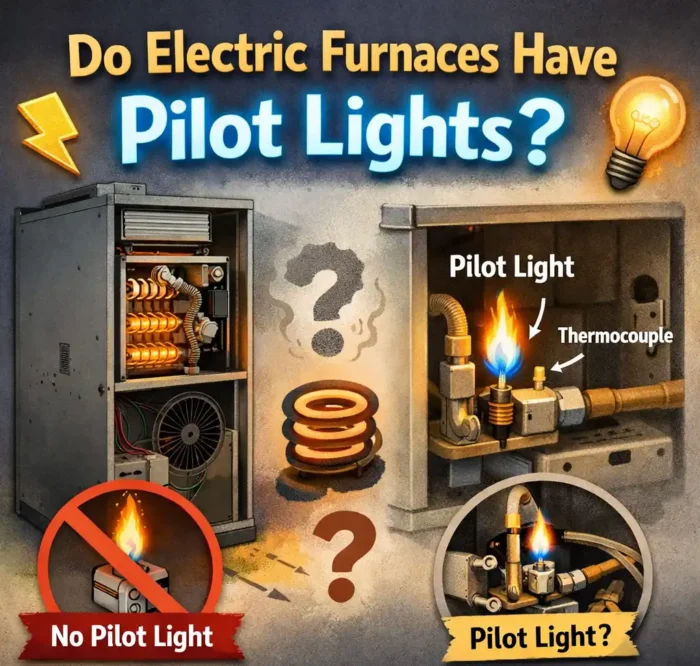
No, electric furnaces do not have a pilot light. If you have opened your furnace cabinet looking for that familiar blue flame from an old gas unit, you will not find one, and that is by design. At Hutchinson Heating and Air, we hear this question constantly from Temecula and Murrieta homeowners switching from gas systems or unfamiliar with electric heating.
The habit of checking a pilot light runs deep, even when the technology has changed completely. This guide breaks down how electric furnaces generate heat without a flame, how to identify your system type, and what is really wrong when your unit stops heating.
What a Pilot Light Actually Is (and Why Gas Furnaces Need One)
A pilot light is a small flame that burns continuously, or in newer systems, ignites briefly on demand, to light the main burner inside a gas furnace. Gas furnaces need this because they generate heat by burning fuel, either natural gas or propane, and something has to spark that combustion process every time the thermostat calls for heat. Older standing pilot light furnace models kept that flame burning around the clock, which is part of why they eventually fell out of favor. A pilot that stays lit twenty four hours a day burns gas even when the furnace is not actively heating anything, and that adds up over a winter.
Modern gas furnaces have mostly moved to intermittent pilot systems or hot surface igniters, which only activate when heat is actually needed. But the underlying principle stays the same. Gas furnaces burn fuel, so they need something to ignite that fuel. This is the entire reason a pilot light furnace exists in the first place, and it is also exactly why the concept does not translate to electric systems. There is no fuel to ignite, so there is nothing for a pilot to light.
How Electric Furnaces Generate Heat Without One
Electric furnaces skip combustion entirely. Instead of burning gas or propane, they push electrical current through a set of heating elements, similar in concept to the coils inside a toaster or an electric stove, except built for continuous residential use and housed inside a metal cabinet with proper safety controls. When your thermostat calls for heat, the system does not need to strike a spark or ignite anything. It simply routes power to those elements.
Here is where most articles stop, but the actual sequence matters if you ever want to understand what is happening inside your unit. When the thermostat signals for heat, a component called a sequencer (or in newer systems, a control board) brings the heating elements online in stages rather than all at once. This staged activation matters for two reasons. First, it prevents a massive electrical draw from hitting your home’s panel all at once, which protects your wiring and breakers. Second, it lets the blower motor start moving air across the elements gradually, which avoids sending a blast of extremely hot air through your ducts the moment the system kicks on.
Once the elements are hot, the blower fan pulls room temperature air across them and pushes that warmed air through your ductwork. A limit switch monitors the temperature of the heating elements themselves and will cut power if things get hotter than they should, which is one of several built-in safety mechanisms that replace the role a pilot light and thermocouple would have played in a gas system. There is no electric furnace pilot light anywhere in this process because there is nothing to ignite. Electricity does the work directly.
How to Tell If Your Furnace Is Electric or Gas
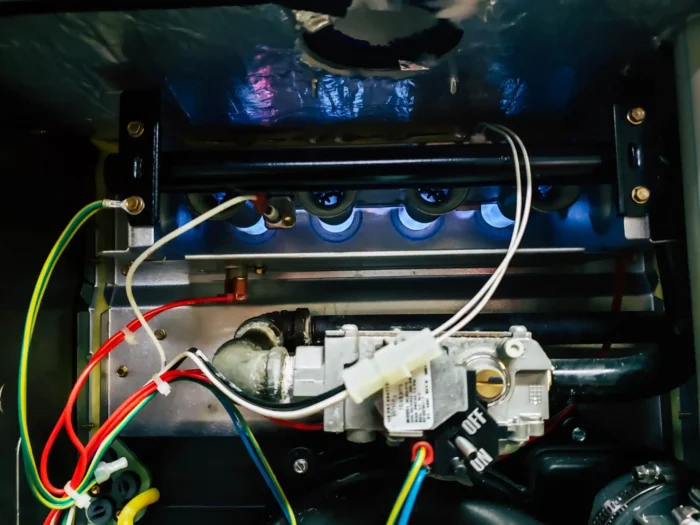
This sounds basic, but we run into homeowners regularly who genuinely are not sure which type of system they have, especially in homes that changed hands a few times or had equipment swapped out during a renovation. A few practical ways to check:
Look at your utility bills. If your gas bill barely changes between summer and winter, but your electric bill spikes noticeably during cold months, you likely have an electric furnace or an electric heat pump with backup electric heat strips.
Check the unit itself. Gas furnaces have a visible gas line running into the cabinet and typically a flue pipe or vent running out through the roof or a side wall to exhaust combustion byproducts. Electric furnaces have neither. If you do not see any venting associated with the furnace, that is a strong sign you are dealing with an electric system.
Open the access panel, carefully, with the power off, and look inside. A gas furnace will have a burner assembly and either a pilot assembly or an igniter near the bottom. An electric furnace will show you a bank of coiled heating elements instead, often stacked in stages, along with a sequencer or control board nearby.
If none of that gets you a clear answer, the model number on the unit’s data plate will tell you exactly what you are working with, and a quick call to a licensed technician can confirm it in minutes.
Common Problems Mistaken for a Pilot Light Issue
Because so many homeowners grew up with gas heating, there is a tendency to mentally file any heating problem under “the pilot must be out,” even on a system that never had one to begin with. We see this constantly in service calls. Someone calls concerned their electric furnace pilot light went out, and the honest answer is that it never had one, so the real issue is somewhere else entirely.
What actually causes an electric furnace to stop producing heat usually falls into one of a few categories. A tripped breaker is extremely common, especially since electric furnaces draw significant current and share panel space with other high demand appliances. A failed sequencer can prevent the heating elements from staging on properly, leaving you with a blower that runs but produces cool or barely warm air. A dirty air filter restricts airflow enough that the limit switch trips repeatedly as a safety measure, cycling the system off before it can build up heat. And a miscalibrated or dying thermostat can simply fail to send the call for heat in the first place, even though the furnace itself is fine.
None of these have anything to do with a pilot light because a furnace without a pilot light was never relying on one to function. Understanding this distinction alone saves a lot of unnecessary worry and, frankly, a lot of unnecessary service calls for the wrong problem.
Electric Furnace Not Heating? Here’s What’s Actually Wrong
If your system is running but not producing warm air, work through this order before assuming the worst. Start with your electrical panel and check for a tripped breaker dedicated to the furnace. These breakers are often rated higher than standard household circuits, so a trip is not unusual if the system is older or the elements are drawing more current than they should.
Next, check your air filter. A clogged filter is one of the most common reasons an electric furnace underperforms, because restricted airflow causes the limit switch to shut the elements off prematurely as a protective measure. This is a five minute fix that solves a surprising number of “no heat” calls.
If the breaker is fine and the filter is clean, the issue is more likely electrical, either a failed sequencer that will not stage the elements on, a bad limit switch stuck in the wrong position, or a thermostat that is not communicating properly with the furnace. These are not homeowner-level repairs, since they involve diagnosing components inside a live electrical system, and getting them wrong risks damaging the unit further or creating a safety hazard.
This is exactly the kind of diagnostic work our technicians handle daily through Hutchinson Heating and Air‘s HVAC service in Temecula, where we walk through this same sequence on real calls across the Temecula and Murrieta area throughout the winter months.
Electric vs. Gas Furnace: Safety, Maintenance & Cost in Temecula/Murrieta
Safety-wise, electric furnaces have a genuine advantage in one specific area: there is no combustion happening inside your home, which means no risk of carbon monoxide production from the furnace itself. Gas furnaces are safe when properly installed and maintained, but they do require carbon monoxide monitoring and regular inspection of the heat exchanger, since a cracked exchanger can allow combustion gases to mix with the air circulating through your home. An electric furnace without a pilot light removes that specific risk entirely, though it introduces its own considerations around electrical load and panel capacity.
Maintenance requirements differ too. Gas systems need periodic burner cleaning, pilot or igniter inspection, and combustion efficiency checks. Electric furnaces generally need less hands-on maintenance since there are no burners or venting to inspect, though the heating elements, sequencer, and blower motor still benefit from an annual checkup to catch wear before it causes a breakdown mid-winter.
Cost is where local context actually matters, and this is something most generic articles skip entirely. Southern California Edison rates in the Temecula and Murrieta service area mean electric heating typically costs more to run per hour than natural gas, especially during peak winter usage when SCE’s tiered pricing structure can push electricity costs noticeably higher. That said, our climate here is mild enough that electric furnaces are rarely running at full capacity for extended stretches the way they might in a colder region, which softens that cost difference considerably compared to what homeowners in harsher climates experience. Local factors like this are exactly why the answer to “is electric or gas cheaper” depends heavily on where you live, not just national averages.
Read More: Gas vs Electric Furnace.
When to Call a Professional
Any time you are dealing with a tripped breaker that keeps tripping, a sequencer that will not stage properly, or a furnace that runs constantly without producing adequate heat, it is time to bring in a licensed technician rather than continuing to troubleshoot on your own. Electric furnaces involve higher voltage components than most household appliances, and working inside the cabinet without proper training carries real risk.
Hutchinson Heating and Air has served Temecula and Murrieta for over 21 years, and our NATE-certified technicians, including our lead technician Hector, handle electric furnace diagnostics and repair on a regular basis. If your system is acting up and you are not sure whether the issue is electrical, mechanical, or something simpler like a dirty filter, a professional inspection through our HVAC service in Temecula page will get you a clear answer instead of guesswork.

Conclusion
So to bring this full circle: an electric furnace pilot light simply does not exist, and it never has, because electric furnaces generate heat through resistance elements rather than burning fuel. What replaces the old pilot light system is a combination of heating elements, a sequencer, a blower motor, and safety switches working together, and understanding that sequence is far more useful than searching for a component that was never part of the design. Whether you are trying to figure out if your current system is electric or gas, or you are dealing with a furnace that will not heat properly, the answers usually come down to breakers, filters, sequencers, or thermostats rather than anything resembling a pilot light issue.
If your electric furnace is giving you trouble this season, or you just want a professional to confirm your system is running the way it should before winter sets in, contact us at Hutchinson Heating and Air. Our team knows these systems inside and out and can get your home back to comfort without the guesswork.
Frequently Asked Questions
Can an electric furnace ever have a pilot light?
No, an electric furnace has never used a pilot light at any point in its design history. Since these systems generate heat through electrical resistance rather than burning fuel, there is nothing that needs to be ignited, which makes a pilot light unnecessary by design rather than something that was simply phased out over time.
What is a pilot light furnace?
A pilot light furnace is a gas heating system that uses a small continuously burning or intermittently ignited flame to light the main burner whenever the thermostat calls for heat. This design applies only to gas and propane furnaces, since electric systems have no fuel to ignite in the first place.
Do new furnaces have pilot lights?
Most new gas furnaces have moved away from traditional standing pilot lights in favor of electronic ignition systems, either hot surface igniters or intermittent pilots, since these use less fuel and are more reliable. Electric furnaces, new or old, have never used pilot lights at all.
Why is my electric furnace not heating anymore?
The most common causes are a tripped breaker, a clogged air filter restricting airflow, a failed sequencer that is not staging the heating elements on properly, or a thermostat that is not sending the call for heat correctly. None of these relate to a pilot light, since electric furnaces do not have one to begin with.
Is a furnace without a pilot light safer?
A furnace without a pilot light, meaning an electric system, removes the risk of carbon monoxide production inside your home since there is no combustion involved. That said, electric furnaces carry their own safety considerations around electrical load and panel capacity, so both system types are safe when properly installed and maintained.