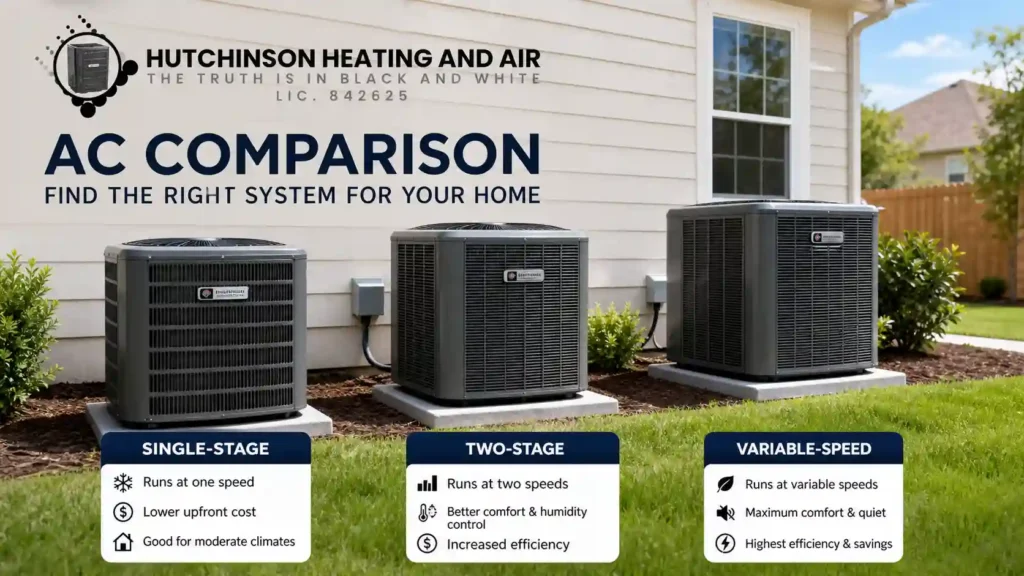
Choosing the right air conditioner is about more than just price or size. The type of compressor inside your system affects comfort, energy efficiency, humidity control, and monthly utility costs. When comparing Single-Stage Two-Stage and Variable-Speed Air Conditioners, it is important to understand how each option performs in real-world conditions.
A single-stage system offers basic cooling, while two-stage and variable-speed models provide greater comfort and efficiency. At Hutchinson Heating and Air, homeowners often ask which option delivers the best value. This guide explains the key differences so you can choose the right AC system for your home and budget.
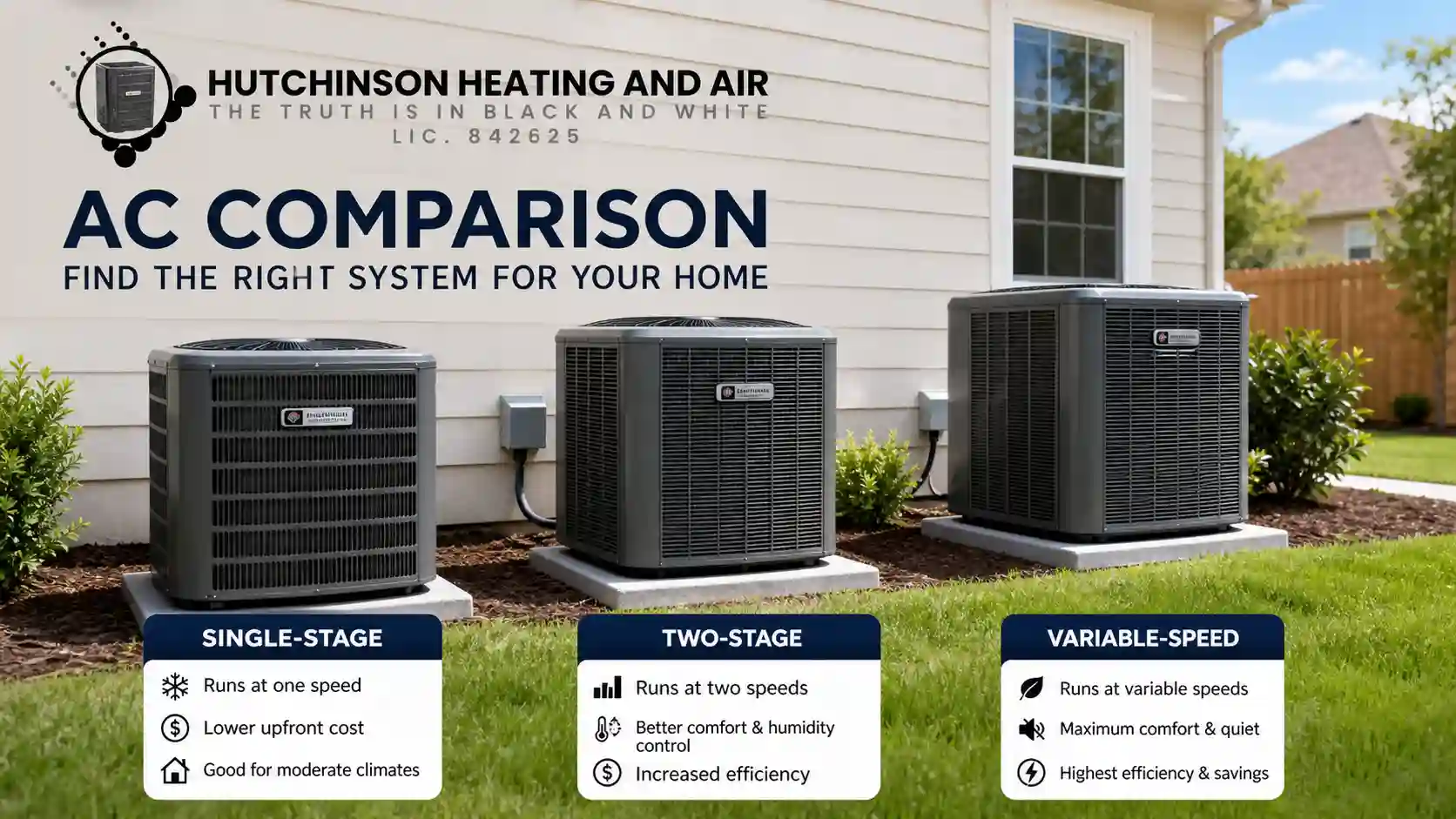
Quick Comparison: Single-Stage vs Two-Stage vs Variable-Speed Air Conditioners
Before diving into the details, here is a quick overview of the three most common compressor types.
Side-by-Side Feature Comparison
A single stage air conditioner operates at one cooling level: 100% capacity. Whenever cooling is needed, the system turns fully on and then shuts off when the desired temperature is reached.
A two stage AC operates at two cooling levels. Most of the time it runs at a lower setting and switches to full capacity only when temperatures rise significantly.
A variable-speed air conditioner continuously adjusts its output based on cooling demand. Instead of operating at fixed levels, it can run at many different speeds to maintain precise indoor comfort.
Which AC Type Is Best for Different Homeowners?
A single-stage unit is often best for homeowners seeking the lowest upfront investment.
A 2 stage ac unit works well for homeowners who want better comfort and energy efficiency without the higher cost of a premium system.
Variable-speed systems are ideal for homeowners who prioritize maximum comfort, humidity control, and long-term energy savings.
What Are Air Conditioner Compressor Stages?
The compressor is often called the heart of an air conditioning system. It circulates refrigerant and plays a direct role in cooling performance.
How an AC Compressor Controls Cooling
When indoor temperatures rise above the thermostat setting, the compressor starts circulating refrigerant through the system. The amount of cooling produced depends largely on how the compressor operates.
Single-stage compressors have one operating speed. Two-stage compressors have two operating levels. Variable-speed compressors can adjust across a wide range of capacities.
Why Compressor Stages Affect Comfort and Efficiency
The more precisely an air conditioner can match your home’s cooling demand, the more comfortable and efficient it tends to be.
Systems that cycle on and off frequently may create temperature swings and higher humidity levels. Systems that run longer at lower capacities generally provide steadier cooling and improved moisture removal.
What Is a Single-Stage Air Conditioner?
A single stage air conditioner remains one of the most common HVAC systems installed in residential homes.
How a Single-Stage AC Works
When the thermostat calls for cooling, the compressor operates at full capacity. Once the target temperature is reached, the system shuts off completely.
There are no intermediate cooling levels. The system is either fully on or fully off.
Advantages of Single-Stage Air Conditioners
The primary advantage is affordability. Equipment costs are usually lower than comparable two-stage or variable-speed systems.
These systems also have simpler designs, making repairs and maintenance straightforward in many situations.
Disadvantages of Single-Stage Air Conditioners
Frequent on-and-off cycling can create temperature fluctuations throughout the home.
Humidity control is often less effective because the cooling cycle may not run long enough to remove significant moisture from indoor air.
Energy efficiency is generally lower compared to more advanced compressor technologies.
Best Homes for Single-Stage AC Systems
A single stage air conditioner may be a good fit for smaller homes, mild climates, rental properties, or homeowners working within a limited budget.
What Is a Two-Stage Air Conditioner?
Many homeowners researching 2 stage vs single stage ac systems discover that two-stage equipment offers a strong balance between affordability and performance.
How a Two-Stage AC Works
A 2 stage air conditioner operates at two cooling capacities.
During mild weather, it typically runs at approximately 60% to 70% capacity. During extreme heat, it shifts to full capacity to meet cooling demands.
Low-Speed vs High-Speed Operation
The lower stage handles most daily cooling needs while consuming less energy.
The higher stage activates when outdoor temperatures rise significantly or when rapid cooling is required.
Advantages of Two-Stage Air Conditioners
A major benefit of a 2 stage ac system is improved comfort.
Because the system runs longer at lower capacity, temperatures remain more consistent throughout the home. Longer run times also improve humidity removal.
Many homeowners also notice quieter operation compared to a standard single-stage unit.
Disadvantages of Two-Stage Air Conditioners
Equipment costs are generally higher than single-stage systems.
The additional components can also make repairs more expensive if major parts fail outside warranty coverage.
Best Homes for Two-Stage AC Systems
A two stage AC is often an excellent choice for medium-sized and larger homes, especially in areas with long cooling seasons and high humidity levels.
What Is a Variable-Speed Air Conditioner?
Variable-speed technology represents the most advanced cooling option currently available for residential HVAC systems.
How a Variable-Speed AC Works
Unlike fixed-capacity systems, variable-speed compressors can continuously adjust their operating speed based on actual cooling demand.
Instead of repeatedly turning on and off, the system makes small adjustments to maintain desired temperatures.
Continuous Cooling and Temperature Precision
Because the compressor constantly adjusts output, indoor temperatures remain remarkably stable.
Many homeowners notice fewer hot and cold spots throughout the house.
Advantages of Variable-Speed Air Conditioners
Superior comfort is often the biggest advantage.
Variable-speed systems provide excellent humidity control, quieter operation, reduced energy consumption, and consistent indoor temperatures.
They are often among the highest-efficiency air conditioners available.
Disadvantages of Variable-Speed Air Conditioners
The biggest drawback is the higher initial investment.
These systems also contain advanced electronics that may require specialized service when repairs are needed.
Best Homes for Variable-Speed AC Systems
Variable-speed systems work particularly well in hot climates, larger homes, and households where comfort and energy efficiency are top priorities.
Single-Stage vs Two-Stage vs Variable-Speed Air Conditioners
Cooling Performance
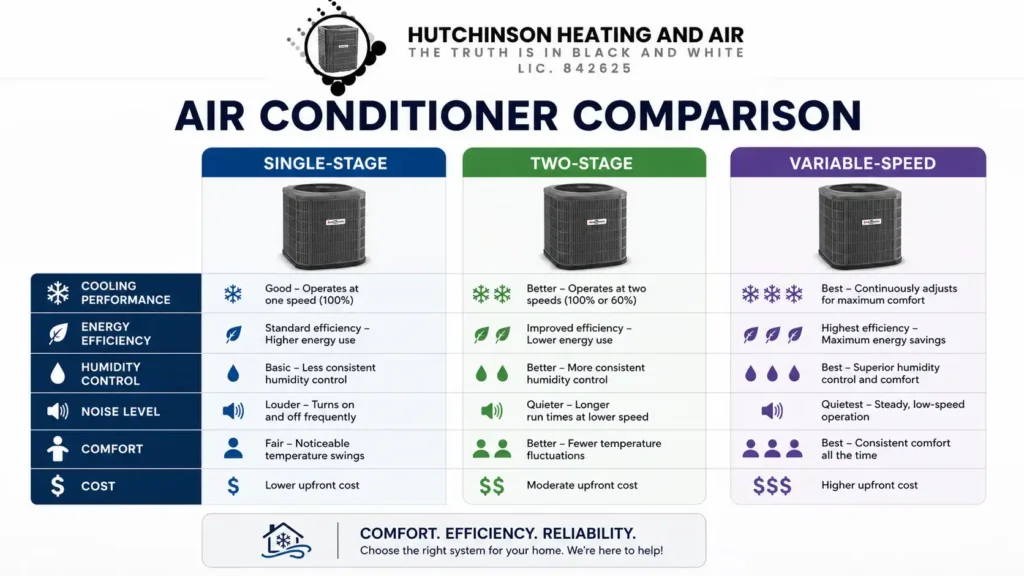
Variable-speed systems provide the most precise cooling performance. Two-stage units offer excellent comfort, while single-stage systems provide basic cooling.
Energy Efficiency
When comparing single stage vs 2 stage air conditioner options, two-stage systems typically use less energy due to longer low-capacity operation.
Variable-speed systems generally achieve the highest efficiency ratings.
Humidity Control
Humidity removal improves as compressor technology becomes more advanced.
Single-stage systems remove the least moisture, while variable-speed systems provide the best humidity control.
Noise Levels
Variable-speed systems are typically the quietest because they spend much of their time operating at lower speeds.
Two-stage systems are also quieter than standard single-stage units.
Indoor Comfort
Variable-speed systems deliver the most consistent comfort, followed closely by a 2 stage ac unit.
Single-stage systems can experience larger temperature swings.
Maintenance Requirements
All systems require regular maintenance, including filter replacement, coil cleaning, and professional inspections.
Proper maintenance helps maximize performance regardless of compressor type.
System Lifespan
Lifespan depends heavily on installation quality, maintenance, and operating conditions. However, systems that avoid excessive start-stop cycles often experience less wear over time.
Comparison Table: Single-Stage, Two-Stage, and Variable-Speed AC Systems
| Feature | Single-Stage | Two-Stage | Variable-Speed |
| Cooling Output | One Level | Two Levels | Multiple Levels |
| Energy Efficiency | Good | Better | Best |
| Comfort Level | Basic | Enhanced | Premium |
| Humidity Control | Basic | Better | Excellent |
| Noise Level | Higher | Lower | Lowest |
| Upfront Cost | Lowest | Moderate | Highest |
| Maintenance Cost | Lower | Moderate | Higher |
| Long-Term Savings | Limited | Good | Excellent |
| Ideal Home Type | Budget Homes | Family Homes | High-Comfort Homes |
Cost Comparison of Single-Stage Two-Stage and Variable-Speed Air Conditioners
Equipment Costs
Single-stage systems generally have the lowest purchase price.
A 2 stage air conditioner typically costs more due to additional compressor technology.
Variable-speed systems usually require the highest upfront investment.
Installation Costs
Installation complexity may increase with more advanced equipment. Proper sizing and setup are essential for achieving expected performance.
Homeowners considering AC Installation Temecula & Murrieta should ensure the contractor performs a complete load calculation rather than simply replacing the existing unit with the same size.
Energy Savings Over Time
While single-stage systems cost less initially, they often consume more electricity over the life of the equipment.
Two-stage and variable-speed systems may offset their higher purchase prices through lower utility bills.
Long-Term Ownership Costs
When evaluating ownership costs, consider equipment price, maintenance expenses, repair costs, and energy consumption rather than focusing solely on installation cost.
Understanding SEER2 Ratings and Energy Efficiency
What Is SEER2?
SEER2 stands for Seasonal Energy Efficiency Ratio 2. It measures how efficiently an air conditioning system operates under updated testing standards.
Higher SEER2 ratings indicate greater energy efficiency.
How Compressor Stages Affect Efficiency Ratings
More advanced compressor technology often contributes to higher efficiency ratings.
Many variable-speed systems achieve significantly higher SEER2 ratings than standard single-stage equipment.
Which AC Type Saves the Most Electricity?
Variable-speed systems generally offer the greatest energy savings.
A properly installed two stage ac can also provide meaningful reductions in electricity consumption compared to a single-stage unit.
How to Choose the Best Air Conditioner for Your Home
Consider Your Budget
Budget remains one of the most important factors. A single-stage unit may provide excellent value if upfront cost is your primary concern.
Consider Your Climate
Homes located in regions with long, hot summers often benefit from the efficiency advantages of two-stage and variable-speed systems.
Consider Humidity Levels
If indoor humidity is a persistent issue, a 2 stage ac system or variable-speed unit may improve comfort significantly.
Consider Home Size and Usage Habits
Larger homes often benefit from equipment capable of maintaining more consistent temperatures across multiple rooms.
When Professional AC Installation Matters
Even the most advanced air conditioner can perform poorly if installed incorrectly.
At Hutchinson Heating and Air, proper system sizing, ductwork evaluation, airflow balancing, and installation quality are considered critical factors for maximizing comfort and efficiency.
Common Myths About Single-Stage, Two-Stage, and Variable-Speed AC Systems
Variable-Speed ACs Are Always Too Expensive
Although initial costs are higher, long-term energy savings can help offset the investment.
Two-Stage ACs Are Only for Large Homes
A two stage ac can benefit homes of various sizes, particularly in areas with high humidity.
Single-Stage ACs Are Outdated
Single-stage systems remain a practical solution for many homeowners, especially those prioritizing affordability.
Higher Efficiency Means More Repairs
Modern high-efficiency systems are designed for reliability when installed and maintained correctly.
You may also read this: Why Is AC Replacement Expensive Compared to Install?
Signs It May Be Time to Upgrade Your Current Air Conditioner
Rising Energy Bills
Increasing utility costs may indicate declining efficiency.
Uneven Cooling
Hot and cold spots often suggest aging equipment or airflow issues.
Frequent Breakdowns
Repeated repairs can become more expensive than replacement over time.
Poor Humidity Control
Excess indoor humidity may indicate that your current system is no longer meeting your home’s cooling needs.
Aging HVAC Equipment
Most air conditioners become less efficient as they age. If your unit is approaching the end of its expected lifespan, replacement may be worth considering.
Final Verdict
If your primary goal is minimizing upfront costs, a single stage air conditioner may be the most practical choice. If you want a balance between affordability, comfort, and energy efficiency, a 2 stage air conditioner is often the best middle-ground option. If premium comfort, superior humidity control, quiet operation, and long-term energy savings matter most, a variable-speed system is usually the top-performing solution.
The right choice ultimately depends on your home’s needs, your budget, and your comfort expectations. If you are considering a new cooling system and need professional guidance, contact us today. The experienced team at Hutchinson Heating and Air can help you compare options, evaluate your home’s requirements, and choose the air conditioning system that delivers the best long-term value.
Frequently Asked Questions
What is the difference between single-stage, two-stage, and variable-speed ACs?
A single-stage system operates at one speed, a two-stage system operates at two speeds, and a variable-speed system adjusts across many speeds. The more stages available, the more precisely the system can match cooling demand.
Is a variable-speed air conditioner worth the extra cost?
For homeowners seeking maximum comfort, lower energy bills, and improved humidity control, a variable-speed system can be a worthwhile investment.
Do two-stage air conditioners save energy?
Yes. A 2 stage ac unit often consumes less energy than a single-stage system because it can operate at lower capacity during most cooling cycles.
Which AC type lasts the longest?
Longevity depends on installation quality, maintenance, and usage. Systems that avoid excessive cycling may experience reduced wear over time.
Can I upgrade from a single-stage to a variable-speed AC?
Yes. However, compatibility with existing components should be evaluated by a qualified HVAC professional before upgrading.