Hearing your heater clunk, buzz, or whistle at night is unsettling and shouldn’t be ignored. A heater making strange noises is an early warning before minor issues escalate into costly part replacements. Homeowners often wait to see if the sound stops, turning a simple fix into a major repair.
At Hutchinson Heating and Air, we created this guide to break down common heating sounds, explaining what they mean and when to call a professional. We’ll cover everything from urgent gas furnace issues to why an electric unit cracks, helping you understand your system before it breaks down.
Quick Answer: Heater Noise Chart
Before we get into the details, here’s a fast reference table based on what our technicians actually diagnose in the field.
| Sound | Likely Cause | Urgency Level |
| Banging or booming | Delayed gas ignition | High, turn off and call same day |
| Rattling or clanking | Loose panel, screws, or ductwork | Low to moderate |
| Whistling | Clogged filter, blocked vent | Low, DIY fixable |
| Squealing or screeching | Worn or slipping blower belt | Moderate |
| Buzzing or humming | Loose wiring, failing capacitor, transformer issue | Moderate to high |
| Clicking | Ignition system or gas valve fault | Moderate |
| Scraping or grinding | Motor or bearing failure | High |
| Rumbling | Incomplete combustion, low pilot light | High |
| Hissing | Possible gas leak or air leak | Emergency |
This isn’t a one-size-fits-all chart. Older homes in Murrieta with original ductwork tend to produce more rattling and popping simply from age, while newer builds in Temecula with tighter, more efficient systems are more likely to show electrical buzzing when a component starts to wear out. Context matters, and that’s exactly why we look at the age of the system, not just the sound, before making a diagnosis.
Common Heater Noises Explained
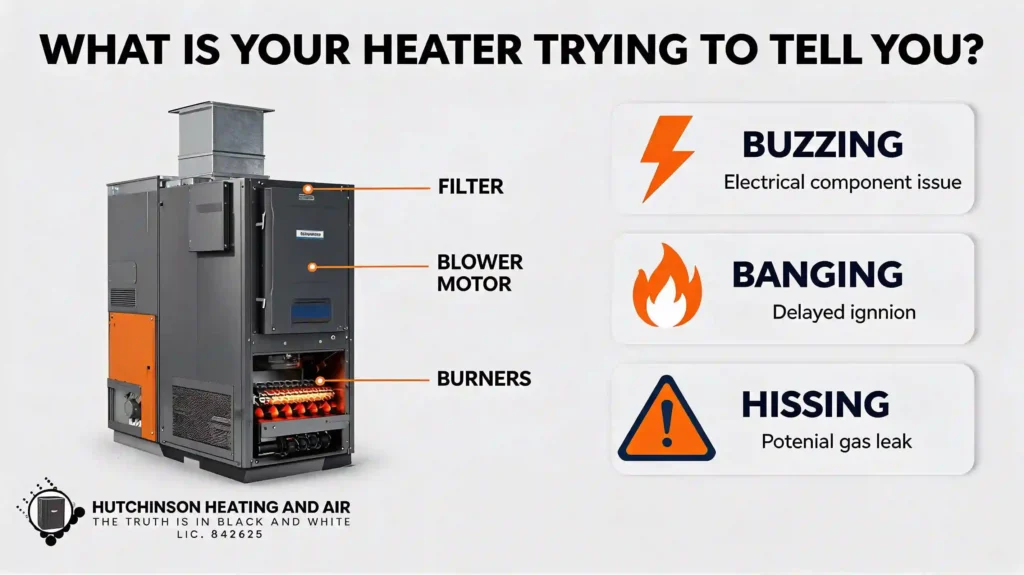
Banging or Booming
A loud bang, especially right when the heater kicks on, is one of the noises we take most seriously. This usually happens because gas has built up in the combustion chamber before it ignites. Instead of a smooth, controlled flame, you get a small delayed explosion. Dirty burners, low gas pressure, or a failing ignition component are the usual culprits.
We’ve walked into homes where the homeowner described this as “just a startup noise” for over a month. In one case in Temecula, that delayed ignition had already begun cracking the heat exchanger, which is not a cheap fix. If your heater makes noise when turning on and it sounds like a bang rather than a soft click, don’t wait on this one.
Rattling or Clanking
Rattling is the most common noise complaint we get, and thankfully, it’s usually the least serious. Loose access panels, screws that have worked themselves free over years of vibration, or ductwork that expands and contracts as air heats up can all cause this. It’s mechanical, not electrical, so the fix is often as simple as tightening a panel.
That said, if the rattling is coming from inside the unit rather than the ductwork, it could mean a part has actually broken loose internally, which changes the urgency significantly.
Whistling
A high-pitched whistling sound almost always points to restricted airflow. A clogged filter is the number one cause, especially in Temecula and Murrieta homes where dust and dry air mean filters get dirty faster than in more humid climates. Closed vents or a collapsed section of ductwork can cause the same effect.
This is one of the few noises you can usually diagnose and fix yourself. Check your filter first. If it’s gray or caked with dust, replace it and see if the whistling stops within a day.
Squealing or Screeching
If your system uses a belt-driven blower motor, a squealing or screeching sound usually means the belt has slipped, stretched, or is simply worn out. It can also indicate the blower motor bearings need lubrication. Left alone, a slipping belt can eventually snap, and that means no airflow at all during a cold snap.
Buzzing or Humming
This is where the electric heater makes crackling noise and why is my heater making a buzzing noise? Questions overlap. In gas furnaces, buzzing typically comes from a loose transformer, aging capacitor, or a blower motor that’s out of alignment. In electric heaters and heat pumps, a buzzing or humming sound often points to loose wiring connections or a failing relay.
Why is my electric heater making noise in the first place is a question we get a lot from homeowners who assume electric systems don’t have the same mechanical wear as gas furnaces. They do, just in different places. Electric heating elements, connectors, and blower fans all experience wear over time, and buzzing is often the first audible sign.
Clicking
A single click or two when your heater starts up is completely normal. That’s the ignition system doing its job. Repeated or continuous clicking without the burner ever lighting is a different story. It usually means the ignition system or gas valve is struggling to fire, which can drain your system’s ability to heat your home efficiently even if it eventually kicks on.
Scraping or Grinding
Metal scraping against metal is never a sound to leave alone. This typically means a part inside the blower assembly has come loose and is now contacting another component, or the motor bearings have worn down to the point of metal-on-metal contact. We treat this as a same-day priority because continued operation can destroy the blower motor entirely.
Rumbling
A deep rumbling sound, especially one that continues after the heater shuts off, often points to incomplete combustion or a pilot light that’s burning too low. Incomplete combustion is a genuine safety concern because it can produce excess carbon monoxide. If you notice the flame looking yellow or orange instead of blue alongside the rumbling, treat this as urgent.
Hissing Noise: Safety Warning
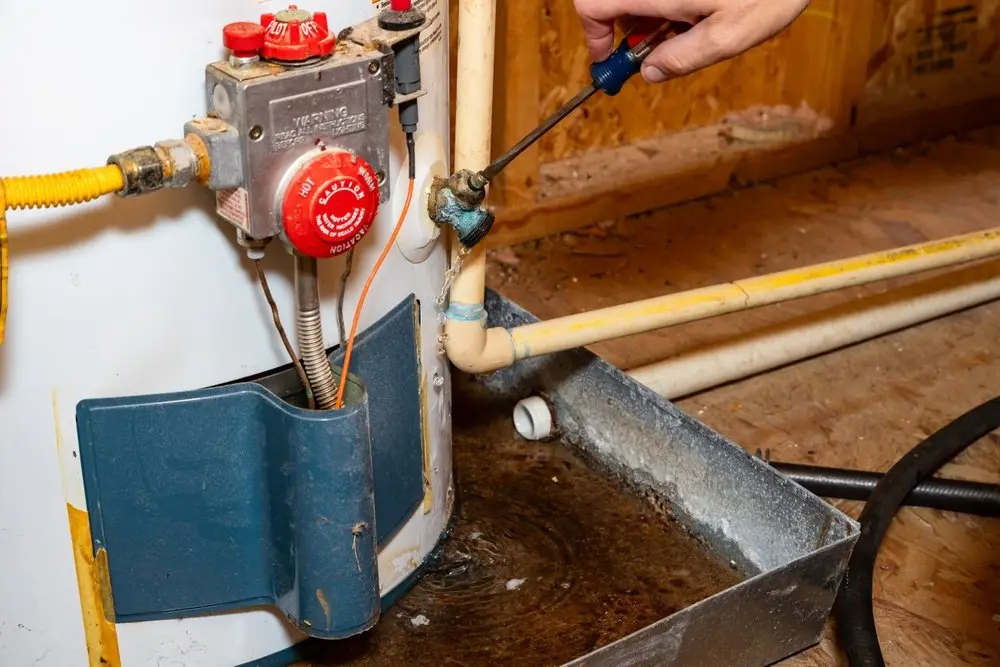
Unlike the noises above, hissing deserves its own section because it can signal a genuine emergency. A hissing sound near your furnace or heater can mean a gas leak, particularly if it’s accompanied by a rotten egg smell. It can also indicate air escaping from a damaged duct or a pressure relief issue in a water heater.
If you hear hissing and smell gas, leave your home immediately, do not turn any switches on or off, and call your gas utility’s emergency line before calling anyone else. This is the one noise on this list where waiting even a few hours is not worth the risk.
Quick Troubleshooting: What You Can Check Right Now
Before assuming the worst, there are a few things worth checking yourself:
- Check your air filter. A dirty filter is behind a surprising number of whistling and even some rattling complaints. Replace it if you can’t see light through it.
- Check that all vents and returns are open and unobstructed. Furniture, rugs, or boxes blocking a vent can create airflow noise that sounds worse than it is.
- Check your breaker panel if you have an electric heater. A tripped breaker that’s been reset improperly can cause intermittent buzzing as the system struggles to draw stable power.
- Look at the flame color if you have a gas furnace and can safely see it. Blue is normal. Yellow, orange, or flickering flames need professional attention.
If none of these quick checks resolve the noise, it’s time to bring in a technician rather than keep guessing.
When to Call a Professional vs. When It Can Wait
Some noises genuinely can wait a few days without risk. Rattling from a loose panel, mild whistling that clears up after a filter change, or occasional clicking on startup all fall into this category.
Others need attention within 24 to 48 hours. Squealing belts, persistent buzzing, and clicking that doesn’t resolve into ignition all fall here, since these problems tend to worsen quickly and can leave you without heat entirely.
A small group of noises are true emergencies. Hissing, rumbling with off-color flames, and scraping or grinding metal sounds should prompt you to shut the system down and call immediately. If you’re in Temecula or Murrieta and need someone to look at it the same day, our team at Hutchinson Heating and Air handles exactly these kinds of urgent diagnostic calls.
You may also read: Heater Not Working?
Repair or Replace? How to Know If It’s Time for a New System
Not every strange noise means you need a new heater, but noise frequency combined with system age is a useful signal. If your furnace is under 10 years old, most of these noises are repairable and worth fixing. Between 10 and 15 years, it becomes a cost comparison. A blower motor replacement on an aging system might cost nearly as much as putting that money toward a new, more efficient unit.
Past 15 years, especially if this is the second or third noise complaint in as many years, replacement usually makes more financial sense than continuing to patch an aging system. Our technicians will always give you an honest comparison of repair cost versus replacement value rather than pushing one option, because a heater that’s constantly making noise is often a heater that’s also losing efficiency, which shows up on your energy bill whether you notice the sound or not.
If you’re dealing with recurring noise issues and want a professional opinion on repair versus replacement, our Heater Repair Temecula & Murrieta team can inspect the system and walk you through real numbers before you decide.
Final Thought
A heater making strange noises is almost never something that fixes itself, and waiting usually turns a minor repair into a bigger one. Whether you’re hearing a simple rattle or something more concerning like hissing or grinding, understanding what the sound means gives you the confidence to act at the right time, not too late and not with unnecessary panic. At Hutchinson Heating and Air, we’ve spent over 21 years helping homeowners across Temecula and Murrieta figure out exactly what their system is trying to tell them, and we’d rather walk you through an honest diagnosis than have you guess. If your heater is making a sound that doesn’t feel right, contact us today and we’ll get a NATE-certified technician out to take a proper look.
FAQs
Is it normal for a heater to make noise when turning on?
A soft click or brief hum during startup is normal. If your heater makes noise when turning on that sounds like a bang, prolonged buzzing, or repeated clicking without ignition, that points to a specific mechanical or electrical issue worth checking.
Why is my electric heater making noise if there’s no gas involved?
Electric heaters can still buzz or crackle due to loose wiring, a failing heating element, or a blower fan that’s out of alignment. An electric heater making crackling noise often means a component is expanding and contracting unevenly as it heats, which usually points to a wiring or element issue.
Can a noisy furnace actually be dangerous?
Most noises are mechanical annoyances rather than safety risks, but hissing, rumbling with an off-color flame, or a persistent gas smell should be treated as genuine emergencies. When in doubt, especially with anything gas related, it’s always safer to shut the system off and call a technician.
Why is my heater making a buzzing noise only sometimes?
Intermittent buzzing often means a component like a capacitor or transformer is starting to fail but hasn’t fully given out yet. It tends to get more frequent over the following weeks, so it’s worth having it checked before it becomes a full breakdown.
How much does it typically cost to fix a noisy heater?
Costs vary widely depending on the cause, from a simple filter replacement under fifty dollars to a blower motor repair running several hundred. The only accurate way to know is a proper diagnostic, since guessing based on the sound alone can lead to paying for the wrong fix.