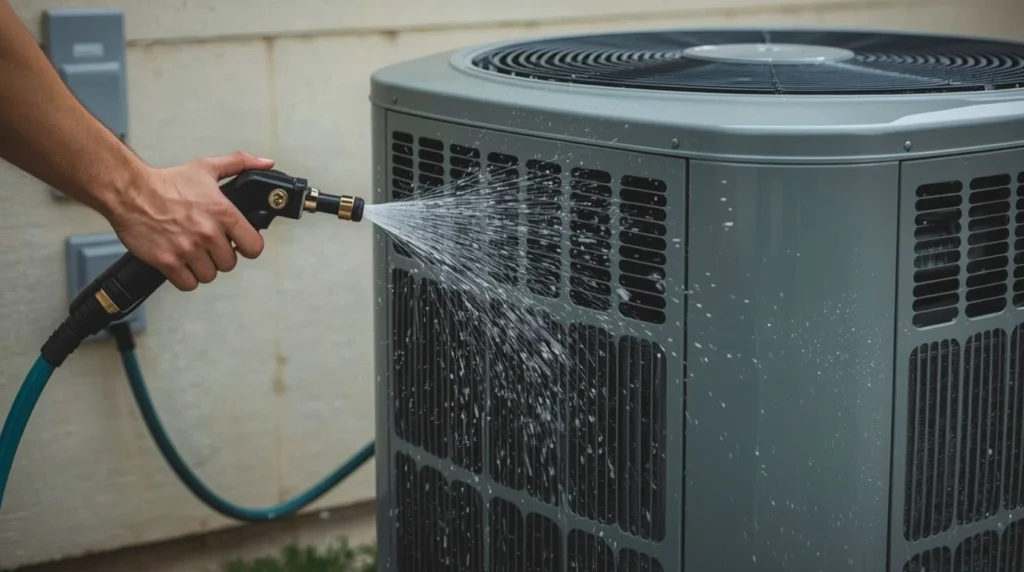
During hot summer months, outdoor AC units collect dirt, dust, pollen, leaves, and debris that can block airflow and reduce cooling performance. Many homeowners ask, Can I clean my AC Unit with a hose? In most cases, yes, using a garden hose with low water pressure is safe when done correctly. Outdoor condenser units are built for weather exposure, but improper cleaning can still damage delicate parts.
At Hutchinson Heating and Air, we help homeowners in Murrieta and Temecula improve AC efficiency through proper maintenance. This guide explains safe AC cleaning methods, common mistakes to avoid, and when professional HVAC service may be necessary.
Is It Safe to Spray an AC Unit with Water?
Yes, it is usually safe to spray your outdoor AC unit with water as long as you use low water pressure and follow basic safety precautions.
Outdoor condenser units are designed to sit outside year-round. They regularly handle rain, humidity, and changing weather conditions. This means gentle water from a standard garden hose is normally safe for cleaning dirt and debris from the condenser coils.
However, there are a few important rules:
- Always turn off power before cleaning
- Never use a pressure washer
- Avoid spraying electrical panels directly
- Use gentle water pressure only
- Be careful around aluminum fins
If done correctly, learning how to clean AC unit with hose methods can help improve airflow and cooling performance without harming the system.
Understanding Your Outdoor AC Unit Before Cleaning
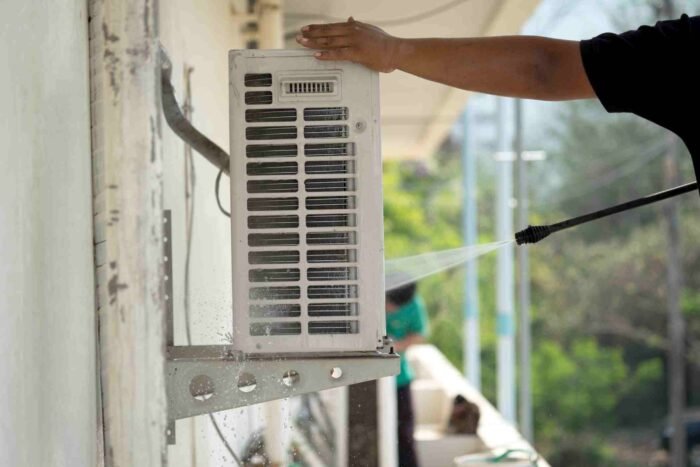
Before cleaning your air conditioner, it helps to understand the main parts of the outdoor condenser unit.
AC Condenser Coils
Condenser coils play a major role in removing heat from your home. When refrigerant passes through the coils, heat transfers outside.
Dirty coils create insulation over the metal surface, making heat transfer less effective. This forces your AC system to work harder and longer to cool your home.
This is one reason many homeowners search online for answers like can i clean my air conditioner with a hose during hot summer months.
Aluminum Fins
The thin aluminum fins around the condenser coils help move air through the system. These fins are delicate and bend easily.
Bent fins reduce airflow and lower cooling performance. That is why you should avoid using strong water pressure while cleaning.
Fan Motor and Electrical Components
Your outdoor AC unit also contains electrical wiring, capacitors, and a fan motor. These components are protected for outdoor use, but direct high-pressure spraying is still risky.
If you notice exposed wires, damaged insulation, or electrical corrosion, stop cleaning and contact an HVAC professional.
Benefits of Cleaning Your AC Unit Regularly
Regular AC cleaning is one of the easiest ways to support better cooling performance and reduce unnecessary strain on your HVAC system.
Better Cooling Performance
A clean condenser coil allows heat to escape more efficiently. This helps your AC cool your home faster during hot weather.
Improved Energy Efficiency
Dirty coils force the compressor to work harder. Cleaning the unit can reduce energy usage and improve overall efficiency.
Lower Monthly Energy Bills
When airflow improves, your AC system does not need to run as long. Many homeowners notice lower utility bills after cleaning dirty outdoor units.
Longer HVAC System Lifespan
Reducing stress on your system may help extend the life of important components like the compressor and fan motor.
Reduced Wear on the Compressor
The compressor is one of the most expensive AC parts to replace. Keeping coils clean helps reduce unnecessary strain.
Routine cleaning combined with professional AC maintenance in Murrieta and Temecula can help homeowners avoid costly repairs and maintain reliable cooling during peak summer months.
When You Should NOT Clean an AC Unit with a Hose
Although hose cleaning is generally safe, there are situations where you should avoid doing it yourself.
Electrical Damage or Exposed Wiring
If you see damaged wires, exposed connections, or signs of electrical burning, do not spray water on the unit.
Frozen Evaporator or Condenser Coils
Ice buildup usually indicates airflow or refrigerant problems. Cleaning alone will not fix the issue.
Refrigerant Leak Signs
Hissing sounds, oily residue, or poor cooling performance may point to refrigerant leaks that require professional repair.
Severely Bent or Damaged Fins
Extremely damaged fins may require special tools and professional straightening.
Active Power Connection
Never clean an AC unit while power is still connected.
How to Clean Your AC Unit with a Hose Safely (Step-by-Step)
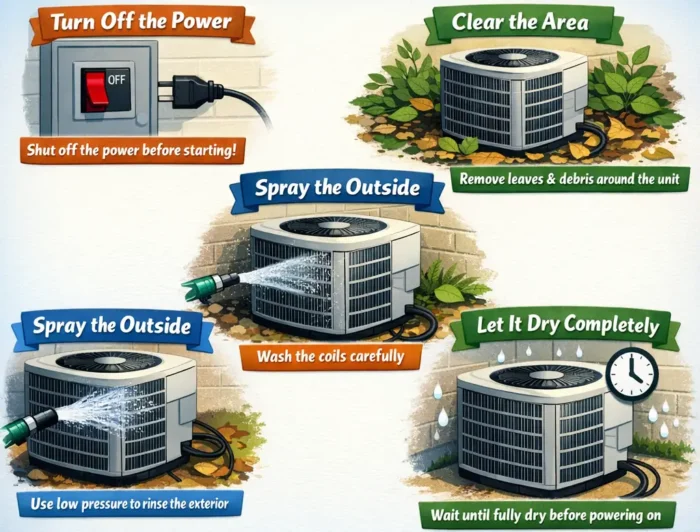
If you want to know how to clean ac unit with hose methods safely, follow these steps carefully.
Step 1: Turn Off Power to the Unit
First, shut off power to the system at the thermostat and breaker panel.
Most outdoor units also have a disconnect box nearby. Turning off power helps reduce electrical risks during cleaning.
Step 2: Remove Leaves, Grass, and Debris
Clear away debris around the condenser.
Remove:
- Leaves
- Grass clippings
- Branches
- Dirt buildup
- Weeds
Try to maintain at least two feet of open space around the unit for proper airflow.
Step 3: Remove the Top Cover if Necessary
For deeper cleaning, some homeowners carefully remove the top grille or cover.
If you are uncomfortable doing this, keep the unit assembled and clean from the outside only.
Step 4: Spray the Condenser Coils with Low Pressure
This is the safest method when asking can you clean an air conditioner with a hose.
Use a standard garden hose with gentle water pressure. Spray through the coils slowly to remove dirt and buildup.
Avoid:
- Pressure washers
- High-pressure spray nozzles
- Aggressive scrubbing
If possible, spray from inside out to push dirt away from the coils.
Step 5: Clean and Straighten the Fins Carefully
If fins become bent, airflow can decrease.
You can use a fin comb to gently straighten damaged fins, but work carefully to avoid further bending.
Step 6: Allow the Unit to Dry Completely
Wait at least 30–60 minutes before restoring power to the system.
This allows moisture to dry around electrical components.
Can a Pressure Washer Damage an AC Unit?
Yes, pressure washers can absolutely damage AC units.
One of the biggest mistakes homeowners make is using strong water pressure to clean condenser coils. While it may seem faster, it often causes more harm than good.
Pressure washers can:
- Bend aluminum fins
- Damage condenser coils
- Restrict airflow
- Force water into electrical components
- Void manufacturer warranties
A regular garden hose is the safer choice.
If you are wondering can i clean my air conditioner with a hose, the answer is yes but low pressure is the key.
Best AC Coil Cleaning Solutions
Different cleaning methods work for different levels of dirt buildup.
Cleaning with Water Only
For light dirt and seasonal maintenance, plain water is usually enough.
Foaming Coil Cleaner
Foaming cleaners are designed specifically for condenser coils and can help break down stubborn debris.
Always follow manufacturer instructions carefully.
Mild Soap and Water Solution
A gentle soap solution can help loosen dirt safely if coils are especially dirty.
Chemicals You Should Avoid
Avoid:
- Bleach
- Acid-based cleaners
- Harsh degreasers
- Strong industrial chemicals
These products can damage metal surfaces and protective coatings.
How Often Should You Clean Your Outdoor AC Unit?
Most homeowners should clean their outdoor AC unit at least once or twice per year.
Spring is usually the best time because the cooling season is about to begin.
You may need more frequent cleaning if:
- You live near trees
- Your area has heavy dust
- Construction is nearby
- Grass clippings collect around the unit
- You have pets that shed heavily
Professional AC maintenance in Murrieta and Temecula is also important for checking refrigerant levels, electrical systems, and overall HVAC performance.
Signs Your AC Unit Needs Cleaning
Sometimes homeowners do not realize their AC is dirty until performance starts dropping.
Weak Airflow
Reduced airflow may indicate blocked condenser coils or restricted airflow.
Warm Air from Vents
A struggling system may blow warmer air than normal.
Higher Electricity Bills
Dirty coils force the system to work longer, increasing energy costs.
AC Running Longer Than Normal
Long cooling cycles are often linked to airflow or efficiency problems.
Visible Dirt on Condenser Coils
If you can visibly see dirt buildup covering the fins or coils, cleaning is likely overdue.
Common Mistakes to Avoid When Cleaning an AC Unit
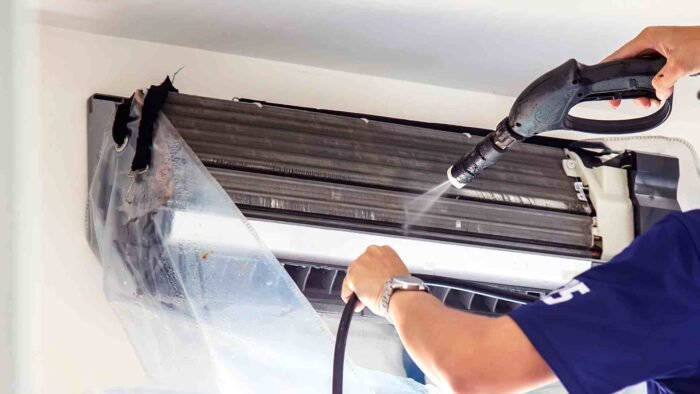
Even simple maintenance mistakes can create expensive repairs.
Using High Water Pressure
Strong water pressure bends fins and damages coils.
Forgetting to Shut Off Power
Always disconnect power before cleaning.
Spraying Electrical Panels Directly
Avoid direct spraying near electrical compartments.
Bending Coil Fins
Fins are extremely delicate and should be handled gently.
Ignoring Professional HVAC Maintenance
DIY cleaning helps, but professional inspections still matter.
At Hutchinson Heating and Air, we often find deeper HVAC issues during routine maintenance visits that homeowners cannot easily spot on their own.
DIY AC Cleaning vs Professional HVAC Maintenance
Homeowners can safely handle basic cleaning tasks, but some maintenance should always be left to professionals.
What Homeowners Can Safely Handle
Most homeowners can:
- Remove debris
- Wash coils gently
- Replace air filters
- Clear vegetation around the unit
What HVAC Professionals Inspect
Professional HVAC technicians check:
- Refrigerant levels
- Capacitors
- Electrical components
- Drain lines
- Airflow performance
- Thermostat calibration
When to Call an HVAC Technician
Call a professional if:
- Your AC still cools poorly after cleaning
- Ice forms on the coils
- You hear unusual sounds
- Energy bills rise suddenly
- You suspect refrigerant leaks
Read More: How to Reset AC Unit?
Can Cleaning Your AC Unit Improve Cooling Efficiency?
Yes, cleaning can improve efficiency in many situations.
When condenser coils stay clean, heat transfers more effectively. This allows the system to cool your home with less effort.
Benefits may include:
- Faster cooling
- Reduced compressor strain
- Lower energy usage
- Better indoor comfort
- Improved airflow
That is why many HVAC professionals recommend seasonal cleaning and regular maintenance.
Extra AC Maintenance Tips for Homeowners
Keeping your entire HVAC system maintained improves comfort and reliability.
Replace Air Filters Regularly
Dirty filters reduce airflow and strain the system.
Keep Plants Away from the Condenser
Maintain open space around the outdoor unit.
Schedule Annual HVAC Tune-Ups
Professional inspections help catch problems early.
Keep Supply and Return Vents Clean
Blocked vents affect airflow throughout the home.
Check Thermostat Settings
Incorrect thermostat settings can impact cooling performance and energy use.

Final Thoughts
So, Can I Clean My AC Unit with a Hose? In most cases, yes as long as you use gentle water pressure, turn off power first, and avoid damaging delicate components.
Routine cleaning can improve airflow, support better cooling performance, and help your HVAC system run more efficiently during hot weather. Still, homeowners should avoid pressure washers and always use caution around electrical components and condenser fins.
If your AC system still struggles after cleaning, professional service may be needed to inspect deeper issues like refrigerant leaks, airflow restrictions, or worn electrical parts.
For reliable inspections, seasonal tune-ups, and trusted HVAC care, contact Hutchinson Heating and Air today. Our experienced team proudly helps homeowners with professional AC maintenance, repairs, and cooling services throughout Murrieta and Temecula.
FAQs
Can water damage an outdoor AC unit?
Gentle water from a garden hose is usually safe because outdoor condenser units are designed for rain and outdoor exposure. Problems mainly happen when homeowners use high-pressure washers or spray electrical areas directly.
Is rain harmful to an AC condenser?
No, rain normally does not damage outdoor AC condensers. These systems are specifically designed to operate outdoors in changing weather conditions.
Can I spray water directly into condenser coils?
Yes, low-pressure water can safely rinse condenser coils. Many homeowners asking can you clean an air conditioner with a hose are relieved to learn that gentle rinsing is a standard maintenance method.
How long should I wait before turning the AC back on?
It is usually best to wait at least 30 to 60 minutes after cleaning. This gives moisture time to dry around sensitive electrical parts.
Can dirty condenser coils increase energy bills?
Yes, dirty coils reduce heat transfer efficiency, causing the AC system to work harder and longer. This often increases electricity usage and cooling costs.