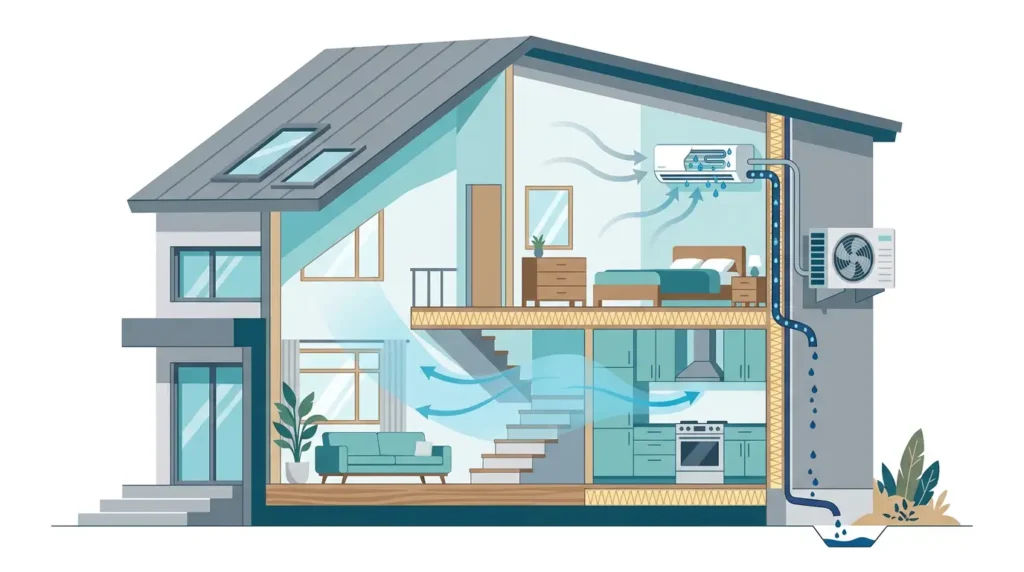
You’re not alone if your house feels stuffy and humid even while the air conditioner is running. Every summer, millions of homeowners deal with this exact issue, and the first question they ask is: Does air conditioning reduce humidity or only cool the air? You might be surprised by the brief response, but it’s a reasonable question.
Yes, air cooling does make it less humid. Water vapor condenses on the cold evaporator coil inside your air conditioner when warm air from inside moves over it. The water vapor drains away from the coil. This takes the wetness out of the air before it comes back into your home. In a way, your air conditioner is both a cooling machine and a dehumidifier all in one. Here’s the catch, though: your AC doesn’t always do this job right. There’s probably a reason why your home still feels damp when it’s hot outside. The process is broken down in this guide, along with what goes wrong and what you can do to fix it.
Key Takeaways
- AC reduces humidity by condensing moisture on the evaporator coil and draining it away.
- The ideal indoor humidity level is 30 to 50 percent, according to ASHRAE guidelines.
- Oversized units, dirty coils, and refrigerant issues can all prevent proper dehumidification.
- Setting the fan to “Auto” instead of “On” makes a real difference.
- A whole-house dehumidifier paired with your AC gives the best results in humid climates.
How Air Conditioning Systems Handle Humidity
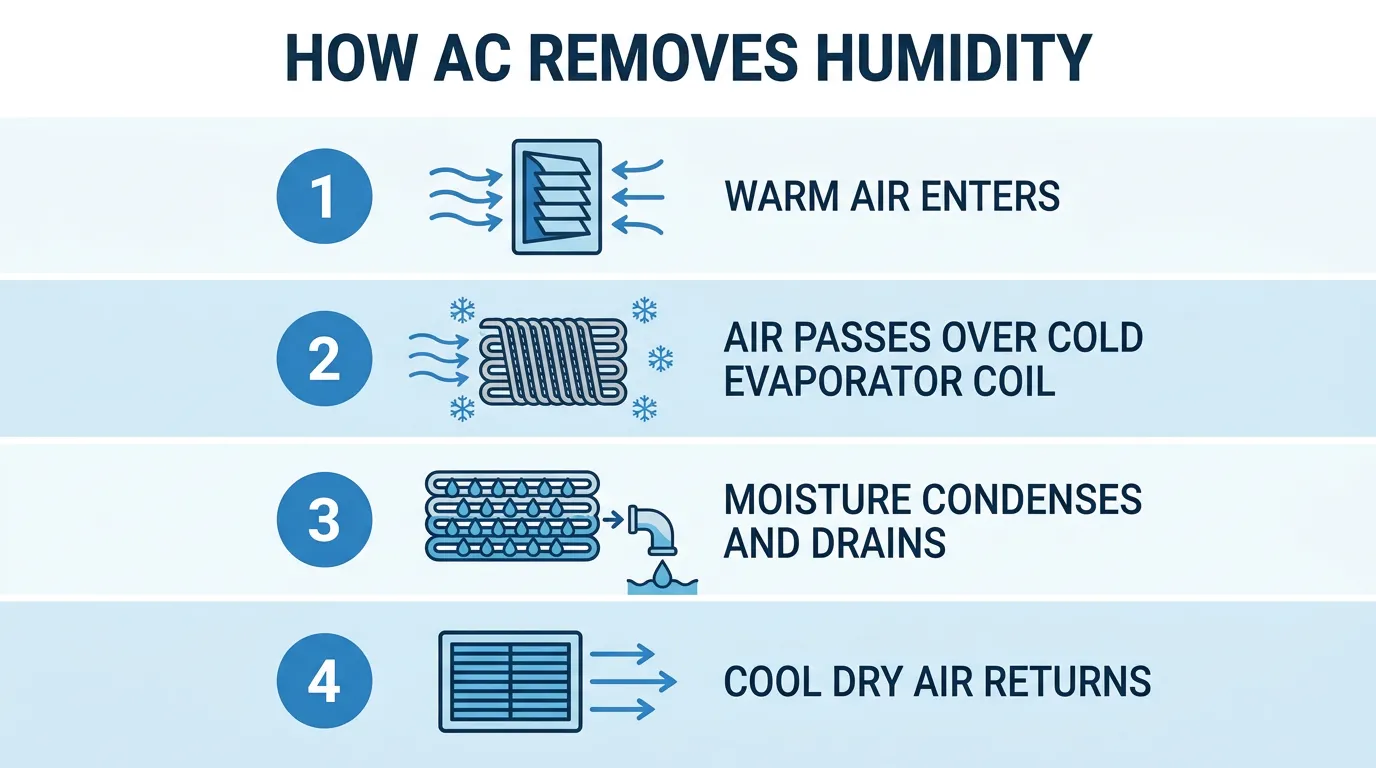
Think of your AC like a sponge for heat and moisture. It doesn’t manufacture cold, dry air from scratch. Instead, it pulls heat and humidity out of the warm air already in your home.
Here’s the step-by-step process:
- Step 1: Warm air enters the system: Indoor air gets pulled into the return vents and flows through the ductwork toward the air handler unit.
- Step 2: Air passes over the evaporator coil: The evaporator coil is filled with cold refrigerant. As air passes over it, the coil absorbs heat and drops the air temperature below the dew point.
- Step 3: Moisture condenses and drains: When air cools below its dew point, water vapor turns into liquid. That condensation collects on the coil, drips into the condensate pan below, and drains out of the system entirely.
- Step 4: Cooler, drier air returns to your home: The blower fan pushes the now-cooler, drier air back through the supply vents into your living spaces.
According to ASHRAE (the American Society of Heating, Refrigerating and Air-Conditioning Engineers), indoor relative humidity should stay between 30 and 50 percent for optimal comfort and air quality.
The most important term here is “relative.” Cool air has less moisture than warm air. When your air conditioner cools the air, it also makes it less able to hold water vapor, which lowers the relative humidity level even more.
Signs Your Home Has Too Much Humidity
Before we talk about why your AC might not be working well, it’s important to know what too much moisture looks and feels like. Most people think they would know if humidity was a problem, but certain symptoms are hard to see.
- The air feels heavy or sticky even when the AC runs
- Condensation appears on windows or cold surfaces
- A musty smell in certain rooms, especially the basement
- Visible mold growth in corners, grout lines, or on walls
- Wood floors, doors, or furniture that warp or swell
- Allergy or asthma symptoms that seem worse indoors
- Higher energy bills despite no change in your AC usage
The EPA estimates that more than 50 percent of homes have conditions that support mold growth, often linked to uncontrolled indoor humidity.
Common Reasons for High Humidity with the AC Running
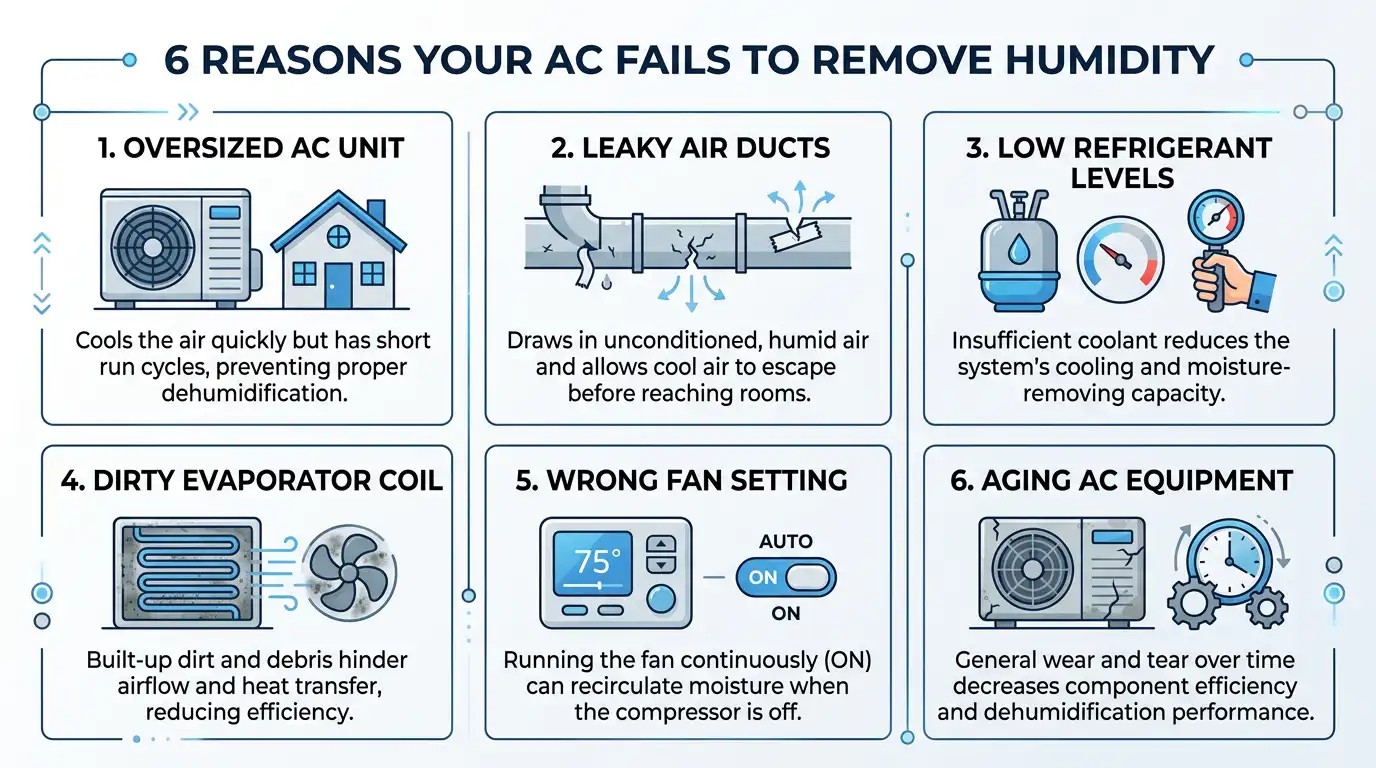
This is where most homeowners get confused. The AC is running, the temperature feels fine, but the home feels clammy and damp. Here are the most common culprits.
- Oversized AC unit: A unit that’s too large cools your home too fast. It shuts off before completing a full cycle, and short cycles mean the evaporator coil never gets enough time to pull moisture out of the air.
- Leaky ductwork: Cracks or gaps in your ducts can pull in humid air from attics or crawl spaces. That moisture enters your system and gets distributed through your home before it can be removed.
- Low refrigerant charge: Refrigerant is what makes the evaporator coil cold. If there’s a leak and refrigerant levels drop, the coil can’t cool air efficiently and can’t condense moisture the way it should.
- Dirty evaporator coil: A coil coated in dust or grime acts as an insulating layer. It can’t transfer heat or collect condensation properly, which reduces its ability to remove moisture from the air.
- Fan set to “On” instead of “Auto”: When the fan runs continuously, it blows air over the wet evaporator coil even when the compressor is off. That moisture gets pushed right back into your living spaces.
- Aging equipment: Older AC units lose efficiency over time. Even if they’re still cooling, their ability to maintain proper humidity levels often drops well before the unit stops working entirely.
Effective Solutions to Improve Humidity Control
The good news is that most humidity problems have practical fixes. Some you can do today, and others require a quick call to an HVAC technician.
1. Switch the thermostat fan to “Auto”
This is the simplest solution. The fan only runs when it’s on “Auto,” and the cooling cycle is running. The coil has time to dry out between cycles, so the condensate pan stays wet, and the water drains away instead of being blown back into the room.
2. Replace or clean the air filter monthly
A clogged filter restricts airflow over the evaporator coil. Reduced airflow means less moisture gets removed. A clean filter keeps air moving freely and maintains the system’s dehumidifying ability.
3. Use exhaust fans in wet rooms
The bathroom, kitchen, and laundry room are the biggest moisture producers in any home. Running exhaust fans when you shower, cook, or wash clothes removes humidity at the source before it spreads to the rest of the house.
4. Schedule a coil cleaning and refrigerant check
A dirty evaporator coil and low refrigerant are two of the most common reasons an AC is cooling but not removing humidity properly. An HVAC technician can clean the coil, test refrigerant levels, and fix any leaks found.
5. Seal leaky ductwork
Professional duct sealing eliminates the pathways through which outside humid air enters your system. This is especially important in homes with ducts running through unconditioned spaces like attics or crawl spaces.
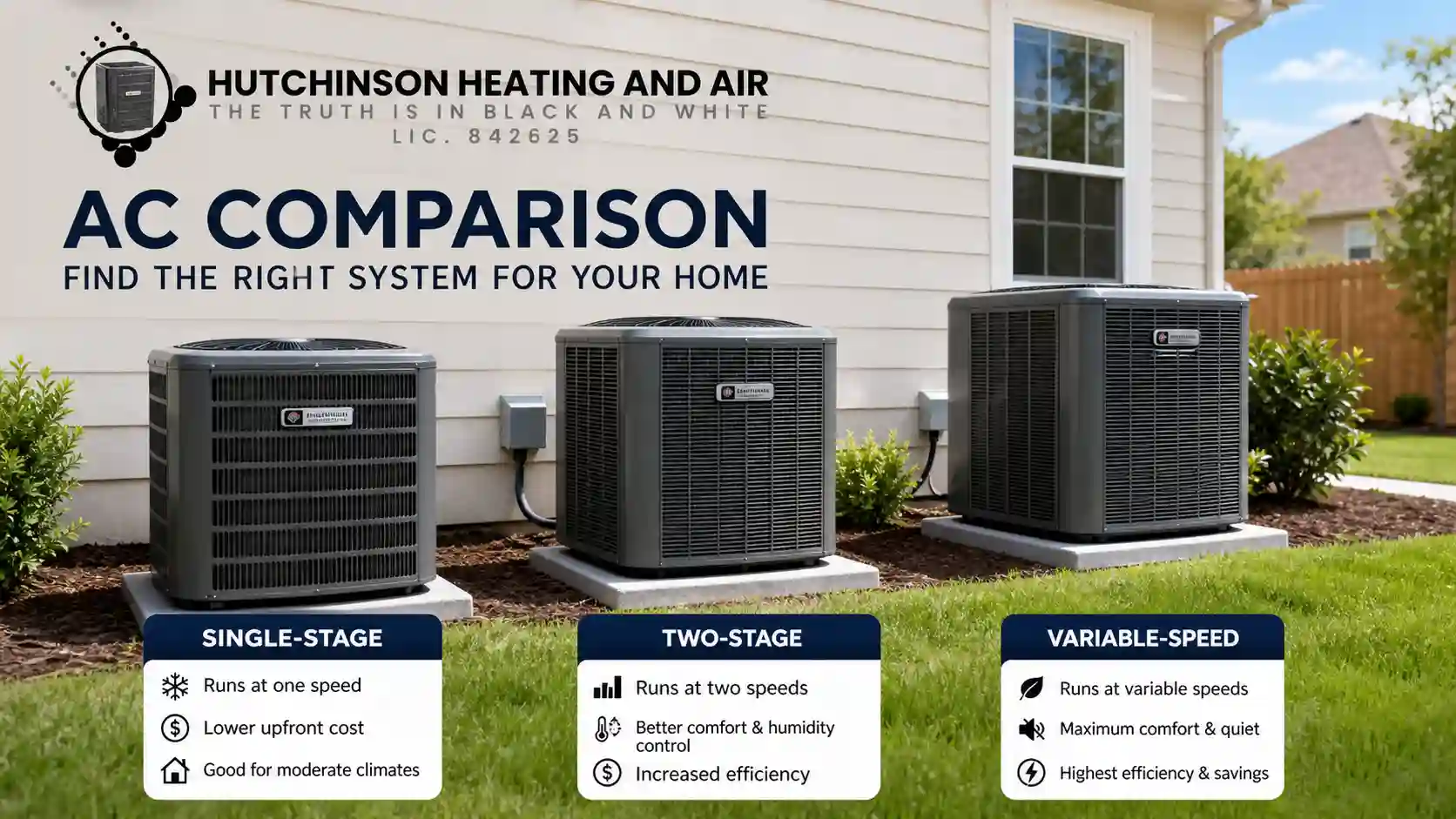
6. Consider a variable-speed blower motor
A variable blower motor modifies speed in response to demand, in contrast to single-speed fans that blast air at maximum force. Running at lower speeds means air spends more time over the cold evaporator coil, allowing better moisture removal.
Why Is a Dehumidification Function Necessary in Air Conditioning?
A specific dehumidification function is essential, as typical cooling methods do not consistently regulate interior humidity levels, particularly in high-moisture settings. Bathrooms, kitchens, and laundry rooms consistently generate more moisture than is eliminated by a cooling cycle. In areas with inherently elevated outdoor humidity, the disparity between the moisture removed by your air conditioning system and the moisture infiltrating your home can be considerable.
Modern air conditioners often include a dedicated “Dry” mode (sometimes labeled DRY on the remote). This mode runs the compressor and fan at lower speeds, specifically to remove excess moisture without dramatically lowering the temperature. It’s more energy-efficient than running a full cooling cycle and works well on mild, humid days when it’s not hot enough to need full cooling.
The dehumidification mode is particularly useful when you’re drying laundry indoors, living in a coastal or tropical region, or dealing with moisture issues on walls and ceilings. It keeps indoor humidity levels in the healthy range without overcooling the space.
AC vs. Dedicated Dehumidifier: Which One Do You Actually Need?
This is one of the most common questions homeowners ask, and the answer depends on your climate and the severity of the problem.
| Feature | Air Conditioner | Dedicated Dehumidifier |
| Primary purpose | Cooling with secondary dehumidification | Moisture removal as the sole function |
| Works without cooling | Limited (Dry mode only) | Yes, at any temperature |
| Best for | General summer comfort control | Basements, crawl spaces, very humid climates |
| Energy use | Higher (cooling + dehumidifying together) | Lower for humidity-only tasks |
| Whole-home coverage | Yes (central AC systems) | Portable: one room; Whole-home: full house |
| Humidity precision | Moderate | High (adjustable humidistat) |
In most cases, the best setup is both working together. Your AC handles the heavy lifting on hot days, and a supplemental dehumidifier manages excess moisture during mild but humid weather when running the AC full-time doesn’t make sense.
When Your AC Needs Help: Supplemental Dehumidification
A standard central AC system works well enough for humidity control in dry or moderate climates. But if you live somewhere with consistently high outdoor humidity, your AC is fighting a much harder battle.
In those climates, outdoor air constantly tries to enter your home through doors, windows, and building gaps. Every time someone enters or exits, a wave of humid air comes in with them. Your AC removes moisture, but if infiltration rates are high, it can’t keep up on its own.
Include a humidity map of the U.S. showing average summer relative humidity by region.
In these situations, a whole-house dehumidifier installed in-line with your HVAC system is the most effective long-term solution. It works in tandem with the AC and can operate independently on days when you need humidity control but not cooling.
If you’re in the Temecula or Murrieta area and your AC is running but still not removing humidity properly, Hutchinson Heating and Air can help. Our team offers professional AC tune-ups, refrigerant testing, coil cleaning, and duct sealing everything needed to restore your system’s dehumidifying performance. Our AC repairing services in Temecula & Murrieta are built around getting your home to the right temperature and the right humidity level, not just one or the other.

Conclusion
So does air conditioning reduce humidity? Yes and it does it through a well-designed process involving refrigerant, the evaporator coil, and condensation drainage. But it’s not infallible.
When there is a malfunction, such as an improper unit size, a soiled coil, a refrigerant problem, or erroneous fan settings, the humidity remains elevated despite the operation of the air conditioning system. The repairs vary from basic thermostat modifications to expert servicing, and the majority are more economical than anticipated.
The target is simple: keep indoor humidity levels between 30 and 50 percent. That’s the range where your home feels comfortable, mold can’t easily grow, and your AC runs efficiently. If you’re outside that range consistently, start with the easy fixes first, then call a professional if the problem sticks around.
Expert AC Services for Ultimate Comfort
Ensure your air conditioning system stays efficient. Schedule your AC maintenance today!
FAQs About Air Conditioning and Humidity
Does air conditioning reduce humidity in all climates?
It lowers humidity in all climes, however it works best in dry or moderate areas. In places with a lot of humidity, the AC typically can’t keep up on its own. To keep the humidity level in your home stable, you need use a dehumidifier as well.
What’s the ideal humidity level for a home with AC?
The ideal range is 30 to 50 percent relative humidity. Below 30 percent and the air starts to feel dry you may notice skin and throat irritation. Above 50 percent and mold spores become a real risk, along with that sticky, uncomfortable feeling.
Why does my house feel humid even when the AC is on?
The most common reasons are an oversized unit that short-cycles, a dirty evaporator coil, low refrigerant, or the fan set to “On” instead of “Auto.” Any one of these can prevent the system from removing moisture effectively even while it cools the air temperature.
Does running the AC on fan-only mode remove humidity?
No. Fan-only mode simply circulates air without activating the compressor. Without the compressor running, the evaporator coil doesn’t get cold, so no condensation forms and no moisture gets removed. It can actually make humidity feel worse by moving warm, damp air around the room.
How much humidity does an air conditioner remove per day?
A typical residential AC unit removes between 5 and 20 gallons of moisture per day depending on the system size, humidity levels, and how long it runs. Larger central systems in very humid conditions can exceed that range significantly.
Is a dehumidifier better than an AC for removing moisture?
For pure moisture removal, a dedicated dehumidifier is more efficient. It’s designed specifically for that job and can operate at any temperature. But for whole-home comfort on hot days, your AC handles both cooling and basic dehumidification together which is why pairing both is often the best approach.
Does AC remove moisture from the air in winter?
Standard air conditioners aren’t designed to run in cold weather, so they don’t remove humidity in winter. In winter, humidity problems are usually handled by your heating system (which dries air as it heats it) or by a standalone dehumidifier in problem areas like basements.