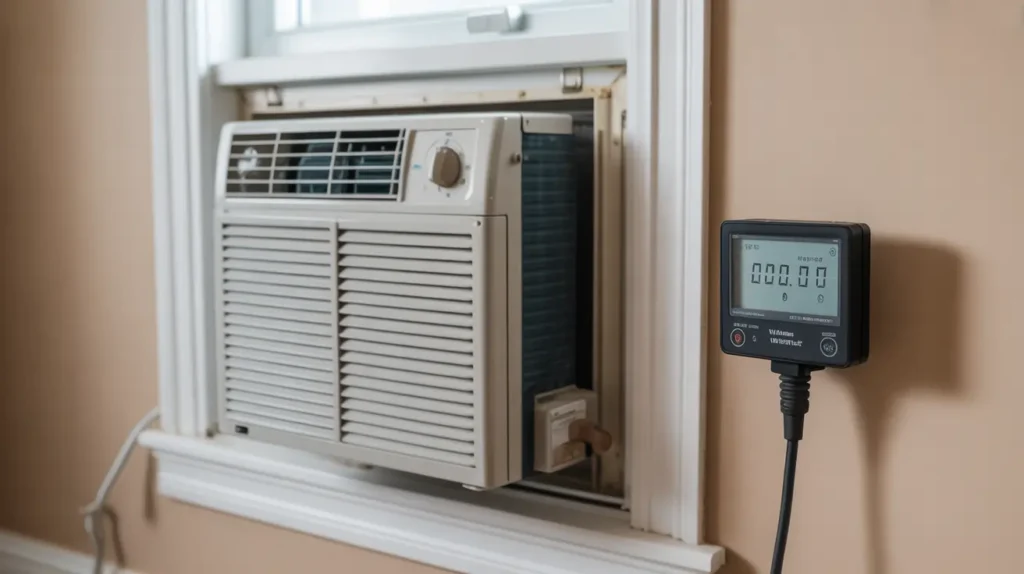
If your summer electric bill jumped the same week you plugged in your window AC, you’re not imagining it. Window units are efficient compared to central air, but they still pull enough power to matter, especially in a Temecula or Murrieta July when your unit runs for ten or twelve hours a day. Knowing how many watts a window AC uses isn’t just a curiosity.
It tells you what your outlet can safely handle, what your monthly bill will look like, and whether your unit is quietly working harder than it should. At Hutchinson Heating and Air, we get this question constantly from homeowners who are trying to figure out if their window unit is normal, oversized, or on its way out. Here’s what actually matters.
Key Takeaways
- Most window AC units draw between 500 and 1,500 watts, depending on BTU size.
- A 5,000 BTU unit runs around 450 to 550 watts. A 12,000 BTU unit can pull close to 1,200 watts.
- Wattage isn’t fixed. Room size, insulation, outdoor temperature, and unit age all change how hard your AC works.
- Older window AC outlets are sometimes not rated for larger units, and that’s a real safety issue, not just a performance one.
- If your window AC seems to be using more power than it used to, it’s often a sign of a maintenance problem, not just “old age.”
Window AC Wattage by Size
Window AC wattage scales pretty predictably with BTU rating, though the exact number depends on the unit’s efficiency. Here’s a realistic range based on typical residential window units.
| BTU Rating | Typical Wattage | Best Suited For |
| 5,000 BTU | 450 to 550 watts | Small bedroom, 100 to 150 sq ft |
| 8,000 BTU | 700 to 800 watts | Medium bedroom or office, 250 to 350 sq ft |
| 10,000 BTU | 900 to 1,000 watts | Living room, 350 to 450 sq ft |
| 12,000 BTU | 1,100 to 1,200 watts | Large room or open space, 450 to 550 sq ft |
| 15,000 BTU | 1,300 to 1,500 watts | Very large room, 550 to 700 sq ft |
These numbers reflect running watts, meaning what the unit draws once it’s cooling steadily. The startup surge, when the compressor first kicks on, can briefly spike 2 to 3 times higher. That surge matters more than most people realize, and we’ll get into why in a moment.
Window AC Wattage Based on BTU
The rough rule of thumb is that every 1,000 BTU of cooling capacity translates to roughly 90 to 100 watts of power draw, assuming a standard EER (Energy Efficiency Ratio) rating. So a 10,000 BTU unit sitting at around 950 watts is normal. If you’re seeing a unit pull noticeably more than that chart suggests for its BTU size, that’s usually a sign the EER rating is low, the unit is older, or something mechanical is off.
How to Calculate Your Exact Wattage
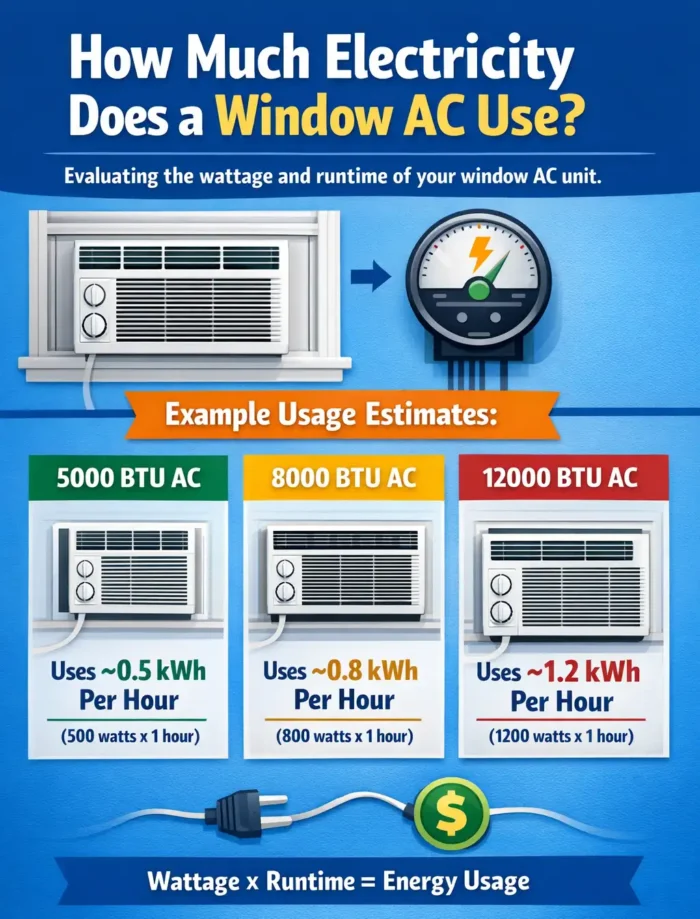
You don’t need to guess. There are two reliable ways to get your unit’s actual wattage.
The first is the simplest: check the yellow EnergyGuide label on the side of the unit or in the manual. It lists the estimated wattage directly.
The second method uses the BTU and EER numbers together, and it’s useful if that label has worn off or you’re comparing units before buying:
Wattage = BTU ÷ EER
For example, a 10,000 BTU unit with an EER of 10.5 comes out to roughly 952 watts. A unit with a higher EER, say 12, would use less power for the same cooling output, around 833 watts. This is why two AC units with identical BTU ratings can have noticeably different running costs. Efficiency isn’t just a marketing number. It directly changes your electric bill.
Factors That Affect Your Window AC’s Power Draw
The wattage listed on the label is a baseline, not a guarantee. Several real-world conditions push actual draw higher or lower:
Room size and insulation. A window AC sized correctly for a 300 square foot room will work far less if that room has good insulation and shaded windows compared to an identical room with single-pane glass and afternoon sun exposure.
Outdoor temperature. The bigger the gap between outside heat and your target indoor temperature, the harder the compressor works. A 95 degree Murrieta afternoon demands more from your unit than a mild 78 degree day.
Thermostat setting. Every degree lower you set the thermostat increases runtime and, over the course of a day, total energy consumption.
Unit age and condition. Compressors lose efficiency over time. A five year old window AC can draw noticeably more watts than it did when new, even doing the same job.
EER rating. As covered above, this is the single biggest factor separating an efficient unit from a power-hungry one at the same BTU size.
What This Means for Your Electric Bill in Temecula & Murrieta
Southern California Edison rates in our service area typically run in the range of 30 to 45 cents per kWh depending on your tier and time of use plan, which is meaningfully higher than the national average. That changes the math on window AC costs quite a bit.
Take a 10,000 BTU unit running at roughly 950 watts for 10 hours a day, which is realistic for a Temecula or Murrieta summer. That’s 9.5 kWh per day. At 38 cents per kWh, you’re looking at around $3.61 a day, or close to $108 over a 30 day month, just for that one unit. If you’re running two or three window units across different rooms, the numbers add up fast, and it’s often the point where switching to central air or a mini-split system actually saves money over a full summer.
This is also why we tell homeowners to check their SCE billing tier before assuming a window AC is the “cheap” option. In our climate, with our rates, it’s not always as inexpensive as it looks on paper.
Does Your Outlet/Circuit Support It?
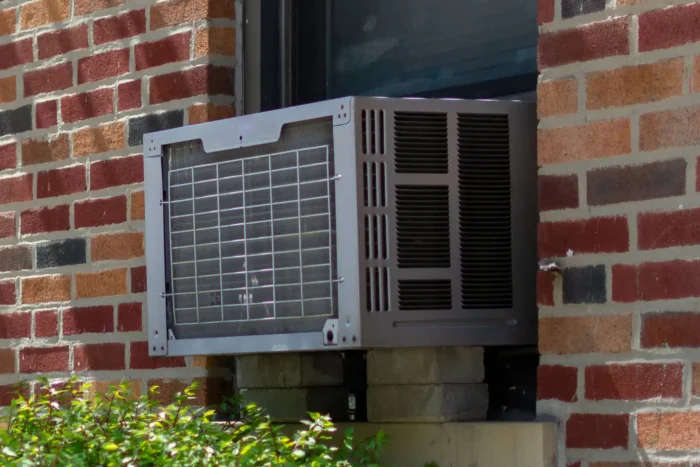
This is the part almost nobody talks about, and it’s the one that actually causes problems.
Most standard household outlets are on a 15 amp circuit. At 120 volts, that’s a safe capacity of about 1,440 watts, and electrical code recommends staying under 80 percent of that for continuous loads, which puts you closer to 1,150 watts. A 5,000 or 8,000 BTU window unit is fine on a standard outlet. A 12,000 BTU or larger unit, especially with other appliances sharing that same circuit, can trip breakers repeatedly or, worse, overheat the wiring.
A few things worth checking before you install a larger unit:
- Larger window units (typically 12,000 BTU and up) often require a dedicated 20 amp circuit, not a shared household outlet.
- Never run a window AC on a standard extension cord. The startup surge can overheat a cord that isn’t rated for it, and this is a genuine fire risk, not just an inconvenience.
- If your breaker trips consistently when the AC’s compressor kicks on, that’s the circuit telling you it’s undersized for the load, not a faulty AC.
If you’re not sure what your outlet is rated for, that’s a question for a licensed electrician or an HVAC technician who can check your panel, not something to guess your way through.
Window AC vs. Central AC: Which Actually Costs Less to Run?
This depends heavily on how many rooms you’re cooling and for how long.
For a single room used occasionally, a window AC is almost always cheaper to operate than running central air for the whole house. The math changes once you’re cooling more than two rooms, or running units most of the day during peak summer heat. Central air conditioners are rated by SEER instead of EER, and modern systems (16 SEER and above) are often more efficient per BTU of cooling than an aging window unit, especially when you factor in that central systems only need to overcome the heat load once, rather than each window unit fighting its own room independently.
There’s also a comfort and lifespan factor. Central systems distribute air more evenly and typically last 12 to 15 years with proper maintenance, compared to 8 to 10 years for a well-kept window unit. If your household relies on three or more window units running daily through a Temecula summer, it’s worth having a technician run the numbers on a central system upgrade, because the break-even point is often closer than homeowners expect.

Tips to Reduce Window AC Energy Consumption
You can meaningfully lower your window AC’s wattage draw and runtime without buying a new unit.
Clean or replace the filter monthly. A clogged filter forces the compressor to work harder to push air through, which increases wattage draw for the same cooling output. This is the single most common cause of a window AC “suddenly using more power.”
Check the seal around the unit. Gaps between the AC and the window frame let hot air in and cool air out, making the unit run longer than it needs to.
Set a realistic thermostat target. 75 to 78 degrees is a reasonable balance between comfort and energy use for most households in our area.
Use it with the room closed off. Cooling an open floor plan with a single window unit means it’s fighting a losing battle, running constantly and drawing more power than it would in a properly sized, closed room.
Schedule seasonal maintenance. A unit that’s been professionally cleaned and checked runs closer to its rated efficiency than one that hasn’t been serviced in a year or two. If you’re not sure when your unit was last serviced, our AC Maintenance Temecula & Murrieta team can take a look and tell you exactly where it stands.
Signs Your Window AC Is Using More Watts Than It Should
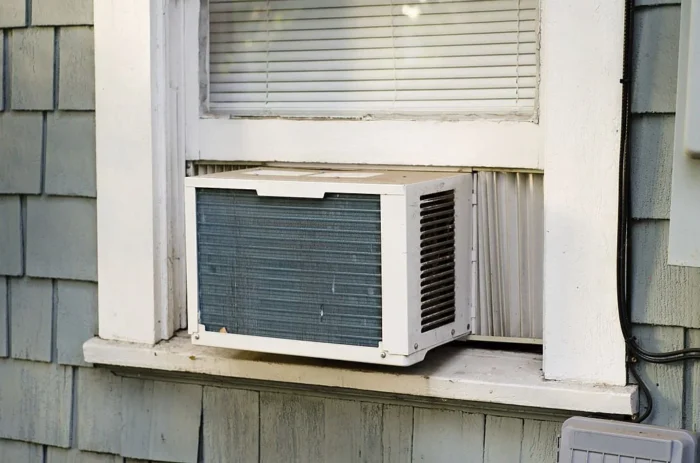
If any of these sound familiar, your unit is likely drawing more power than its rated wattage suggests it should:
- Your electric bill has climbed noticeably without a change in usage habits.
- The unit takes longer than it used to in order to cool the same room.
- You hear the compressor cycling on and off more frequently than before.
- The breaker trips occasionally, even though it wasn’t used to.
- The unit feels warm to the touch on the exterior housing, more than normal operating warmth.
These are usually maintenance issues, not reasons to replace the unit outright. A dirty coil, low refrigerant, or a failing capacitor can all force a window AC to pull significantly more wattage just to do the job it used to do efficiently.
When to Call a Professional
Some of this you can check yourself. Filter cleaning, thermostat settings, and checking for obvious drafts around the unit are all reasonable DIY tasks. But if your breaker keeps tripping, your bill has jumped without explanation, or the unit is drawing noticeably more power than its rated wattage, that’s a job for a licensed technician.
Hector, our lead technician at Hutchinson Heating and Air, sees this pattern often: a homeowner assumes their window AC is simply old and inefficient, when the real issue is something fixable, like a failing capacitor or a refrigerant leak that’s making the compressor work overtime. Diagnosing that correctly means the difference between a $150 repair and buying a replacement unit you didn’t actually need.
Final Thoughts
Understanding window AC wattage isn’t about memorizing a chart. It’s about knowing what’s normal for your unit, what your electrical system can safely handle, and when a change in performance is telling you something worth looking into. Most window units fall in a predictable range based on BTU size, but real-world conditions, unit age, and maintenance history all shift that number in ways that show up directly on your electric bill.
If your window AC’s power draw has changed, your outlet situation feels uncertain, or you’re weighing whether it’s time to move toward central air, Hutchinson Heating and Air is here to help. Contact us today to schedule an inspection or talk through what makes sense for your home and your budget
Ensure Your AC Uses Less Electricity with Expert Maintenance
Keep your air conditioner in top condition. Book your AC maintenance service today!
FAQs
How many watts does a 5,000 BTU window AC use?
A 5,000 BTU window AC typically uses between 450 and 550 watts during normal operation. The exact figure depends on the unit’s EER rating, with more efficient models sitting toward the lower end of that range.
Can a window AC run on a regular outlet?
Smaller window AC units, generally 5,000 to 8,000 BTU, run fine on a standard 15 amp household outlet. Larger units, especially 12,000 BTU and above, often need a dedicated circuit to avoid tripped breakers or overheating.
How much electricity does a window AC use per hour?
Most window air conditioner wattage falls between 500 and 1,200 watts per hour of continuous operation, depending on size. Over a full day of summer use, that typically adds up to 5 to 12 kWh depending on the unit and how often it cycles.
Is a window AC cheaper to run than central air?
For cooling a single room, a window AC is usually cheaper than running a full central air system. Once you’re cooling multiple rooms for most of the day, central air often becomes the more cost-effective option, particularly with a modern high-SEER system.
Does energy efficiency (EER) affect wattage?
Yes, significantly. Two units with the same BTU rating can have very different wattage draws depending on their EER rating, since a higher EER means less power is needed to produce the same amount of cooling.