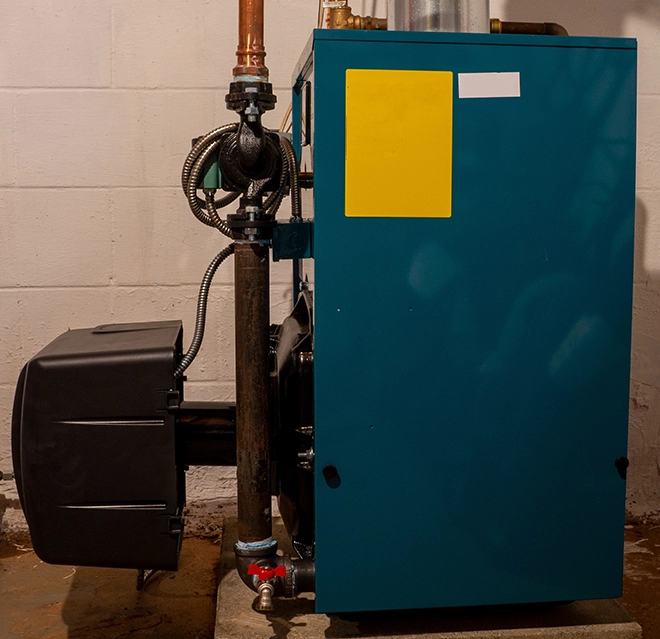
If you searched for oil furnace replacement cost expecting a number tied to your Temecula or Murrieta home, here’s something most guides won’t tell you upfront: oil furnaces are almost never installed in Southern California. Not because of price, but because our region simply doesn’t use them. Still, if you moved from a colder state, bought an older property, or inherited a heating system you don’t fully understand, this guide breaks down real numbers and gives you a clear picture of what to do next. Hutchinson Heating and Air has spent over 21 years working on heating systems across this region, and this article reflects what we actually see in the field, not generic national averages.
Do You Even Have an Oil Furnace?
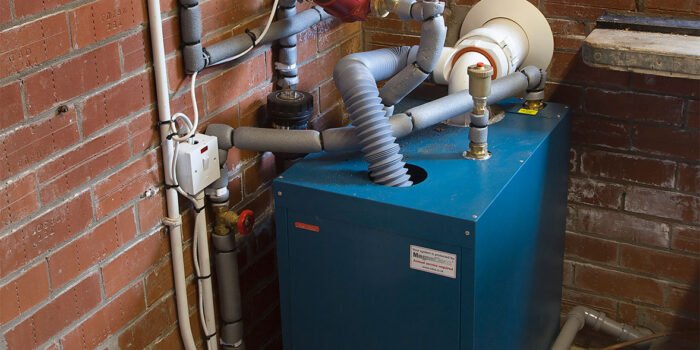
Before spending time comparing prices, check your system. Oil furnaces burn heating oil stored in a tank, usually located in a basement, garage, or buried outside. You’ll know you have one if there’s a tank nearby, if you smell a faint oil odor near the unit, or if a delivery truck fills your tank periodically.
Here’s the local reality. Southern California homes are built around natural gas lines or electric heat pumps because oil delivery infrastructure was never widely built here the way it was in the Northeast. Our mild winters also never justified the fuel storage and delivery logistics that oil heating requires. So if your Temecula or Murrieta home does have an oil furnace, it’s likely because the home is older, was relocated from another system type, or was custom-built with an unusual setup decades ago.
This matters because your options aren’t limited to a straight oil-to-oil swap. In most cases, converting to gas or electric ends up being the smarter long-term move, which we’ll cover further down.
Average Oil Furnace Replacement Cost
Nationally, oil furnace replacement cost typically falls between $2,500 and $10,000, with most homeowners landing somewhere around $5,000 to $6,000 for a standard installation. Standard efficiency units run $3,500 to $7,500, while high-efficiency models with advanced components can push past $9,000.
Locally, the picture changes. Because so few contractors in this region regularly install oil systems, parts sourcing and specialized labor can add cost and delay compared to what you’d find in a state where oil heating is common. A straightforward cost to replace oil furnace in this area often lands at the higher end of the national range simply due to limited local supply chains for oil-specific parts and equipment.
This is one of the first things our technicians flag during an in-home assessment. We’ve walked into homes where the homeowner assumed a same-day swap was possible, only to learn that ordering the correct oil burner assembly took over a week because it isn’t stocked locally the way a gas furnace component would be.
What Actually Drives the Cost
Several factors combine to determine your final new oil furnace cost, and understanding them helps you avoid overpaying or underbudgeting.
Home size drives the BTU requirement. A 1,000 square foot home might need a furnace producing 60,000 to 80,000 BTUs, while a 3,000 square foot home could require closer to 120,000 BTUs. Undersized units struggle to keep up, running constantly and wearing out early. Oversized units cycle on and off too frequently, which wastes fuel and puts uneven strain on components.
AFUE efficiency rating affects both the sticker price and your long-term fuel costs. Standard efficiency units rated 80 to 87 percent AFUE cost less upfront, typically $1,200 to $4,000 for the unit alone. High-efficiency units rated 90 to 97 percent AFUE cost more initially, often $3,000 to $10,000, but burn less fuel over time.
Brand and build quality matter too. Furnaces built with heavier gauge steel, better heat exchangers, and stronger warranties cost more but tend to need fewer repairs over their lifespan.
Labor typically adds $1,000 to $3,000 depending on job complexity, and this is where local conditions matter most. A technician unfamiliar with oil burner calibration will take longer and may need to make return visits, driving labor costs up. This is exactly why working with a crew that has documented, hands-on oil system experience protects your budget.
Ductwork conditions play a bigger role than most homeowners expect. If your ducts are old, leaking, or undersized for the new furnace’s output, you could be looking at an additional $2,500 to $6,600 for major duct work, or as little as $40 per linear foot for minor repairs.
Finally, oil tank condition can’t be ignored. An aging or corroded tank sometimes needs replacement alongside the furnace itself. Above-ground tank replacement runs around $1,000, while an in-ground tank replacement, which requires excavation, can climb toward $6,200.
Signs Your Old Oil Furnace Needs Replacing, Not Repairing
Not every furnace problem means you need a full replacement. Here’s how to tell the difference based on what we see in the field.
If your furnace is under 10 years old and the repair estimate is reasonable, repair almost always makes sense. Once a unit crosses the 15 year mark, the calculation shifts. At that age, a single major repair, like a cracked heat exchanger or failed blower motor, often costs 50 percent or more of what a full replacement would run. When repair costs approach that threshold, replacement becomes the financially sound choice.
Watch for these warning signs specifically:
Rising energy bills without a clear explanation usually point to declining combustion efficiency. Inconsistent heating, where some rooms stay cold while others overheat, signals that the system can no longer distribute air properly, often due to a failing blower or a furnace that’s undersized or oversized for the space. Frequent repair calls, especially more than one per heating season, indicate the unit is entering its final years. Unusual noises, like banging, screeching, or a delayed ignition sound, often mean internal components are wearing out.
If you’re noticing two or more of these signs together, it’s worth scheduling a full inspection rather than waiting for a breakdown in the middle of winter.
Why Most Local Homeowners Switch to Gas or Heat Pump Instead of Replacing Oil-to-Oil
Here’s the insight most cost guides skip entirely. When our technicians evaluate an aging oil furnace in a Temecula or Murrieta home, the recommendation is rarely a like-for-like oil replacement. Instead, most homeowners end up switching to natural gas or an electric heat pump, and there are practical reasons why.
Oil delivery in this region isn’t as reliable or competitively priced as it is in states where oil heating is the norm. Fewer local suppliers means less price competition, and homeowners often end up paying more per gallon than they would in a region built around oil infrastructure. Natural gas, where available, tends to burn cleaner and offers more predictable pricing tied to utility rates rather than fluctuating fuel delivery costs.
Heat pumps offer another advantage specific to our climate. Southern California’s mild winters mean a heat pump can handle heating duties efficiently without the intensity required in colder regions, while also providing cooling in summer from the same system. That dual function often makes heat pumps the more practical long-term investment for local homeowners replacing an old oil unit.
None of this means oil replacement is the wrong choice in every case. If your home’s ductwork and infrastructure are already built around an oil system, and the tank is in good condition, a straight replacement can still make sense. But it’s a conversation worth having with a technician who can walk through both paths honestly.
You may read Why Does A Gas Furnace Stop Working?
Cost Comparison: Oil Furnace Replacement vs. Converting to Gas/Electric
Here’s how the numbers generally compare based on what we’ve priced out for local homeowners.
A direct oil furnace replacement typically runs $4,500 to $10,500 when you factor in current labor rates and limited local parts availability discussed earlier.
Converting to natural gas involves running a new gas line if one isn’t already present, which can add $500 to $2,000 depending on distance from the meter, plus the furnace itself and installation, generally landing between $4,000 and $8,000 total for the full conversion.
Converting to an electric heat pump often costs $5,000 to $12,000 installed, but eliminates fuel delivery costs entirely and adds cooling capability, which can offset the higher upfront price over several years, especially during Temecula and Murrieta summers when air conditioning runs heavily.
The right choice depends on your existing infrastructure, how long you plan to stay in the home, and your monthly utility budget. A proper in-home assessment is the only way to get an accurate number, since ductwork compatibility and electrical panel capacity both factor into a heat pump conversion cost.
Rebates, Tax Credits & Financing Options
Replacing a heating system, whether staying with oil or converting to gas or electric, may qualify for financial incentives. Through 2032, homeowners can claim a federal tax credit covering 30 percent of qualifying furnace replacement costs, up to $600, when installing an ENERGY STAR certified high-efficiency unit. Heat pump installations often qualify for larger credits given their dual heating and cooling function.
Local utility providers sometimes offer additional rebates for high-efficiency equipment or electrification projects, and these programs change periodically, so it’s worth asking during your consultation what currently applies. Many homeowners also choose financing plans that spread the cost of a full new oil furnace cost or conversion project over monthly payments rather than paying the full amount upfront.
Why Work With a Local NATE-Certified Technician for This Decision
This is a decision where experience genuinely changes the outcome. Oil systems are uncommon enough in this region that not every HVAC company has technicians who regularly service or replace them. Hutchinson Heating and Air employs NATE-certified technicians, led by Hector, who bring hands-on experience diagnosing both legacy oil systems and modern gas and electric alternatives.
That matters because the right recommendation isn’t always the obvious one. A technician without oil system experience might default to the easiest option rather than the one that actually fits your home’s infrastructure and your long-term costs. An accurate assessment requires someone who can evaluate your ductwork, electrical capacity, existing tank condition, and realistic fuel access before recommending a path forward.
If you’re weighing your options, our team offers full HVAC Services in Temecula covering everything from inspection and repair to complete system replacement and conversion planning.
Conclusion
Oil furnace replacement cost isn’t a one-size-fits-all number, and in Southern California, the honest answer often involves more than just swapping one oil unit for another. Whether your home genuinely needs a straight replacement or would benefit more from converting to gas or electric heat, the right decision comes down to your specific home, ductwork, and budget. Hutchinson Heating and Air has the local, hands-on experience to walk you through every option honestly, without pushing you toward the most expensive path. Contact us today to schedule an in-home assessment and get a real number for your home, not a national average.
FAQs
What is the average oil furnace replacement cost?
Most homeowners nationally pay between $2,500 and $10,000, with $5,000 to $6,000 being typical for a standard efficiency system. In areas where oil heating is uncommon, costs can run higher due to limited local parts and specialized labor availability.
Does a high-efficiency furnace cost more to replace?
Yes, high-efficiency units with 90 to 97 percent AFUE ratings typically cost $3,000 to $10,000 for the unit alone, compared to $1,200 to $4,000 for standard efficiency models. The higher upfront cost is usually offset over time through lower fuel consumption.
What affects oil furnace replacement cost the most?
Home size and BTU requirements, AFUE efficiency rating, ductwork condition, and oil tank condition are the biggest factors. Labor costs also vary significantly based on how experienced the installing technician is with oil systems specifically.
How long does an oil furnace last?
With proper annual maintenance, oil furnaces typically last 15 to 25 years. Once a unit passes the 15 year mark, repair costs start to justify replacement rather than continued patchwork fixes.
Is professional installation required for an oil furnace?
Yes, oil furnace installation cost estimates should always include certified professional labor due to the complexity of burner calibration, ventilation requirements, and fuel line safety. Attempting a coil furnace installation cost shortcut through DIY work risks both safety hazards and voided warranties.