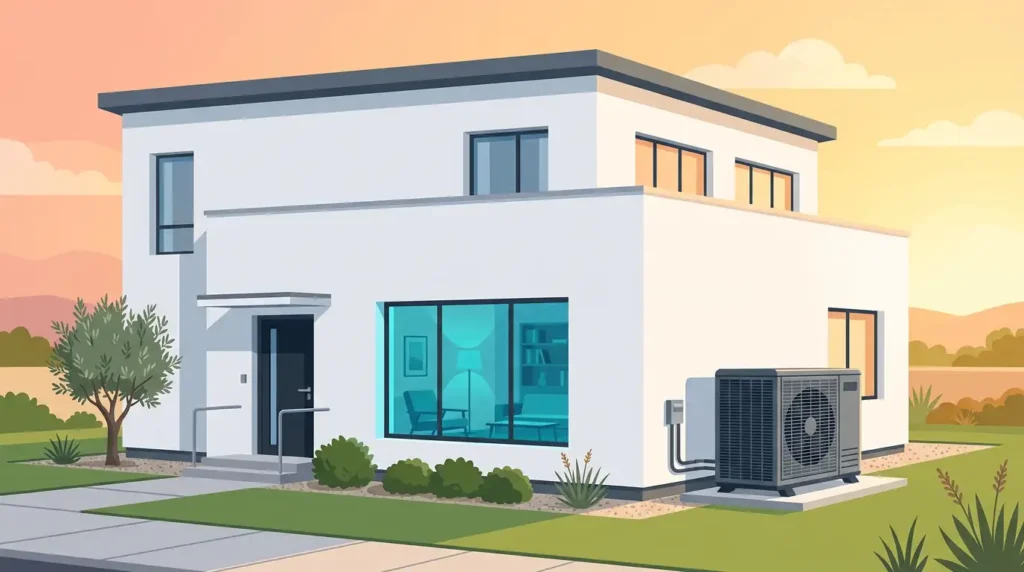
Your AC is running, but the house still feels like an oven. Sound familiar? Most people blame the thermostat or the filters, but the real problem often sits outside your home, quietly working harder than it should. Understanding what is aircon condenser and how it fits into your cooling system can save you from costly repairs and uncomfortable summers.
In simple terms, the aircon condenser is the outside part of your air conditioning system. It takes heat out of your home and sends it outdoors, keeping the air inside cold. Think of it as the part of your cooling system that lets air out. Nothing else works if it doesn’t work right.
Key Takeaways
- The AC condenser is the outdoor unit responsible for releasing heat outside your home
- It works as part of a closed-loop refrigeration cycle with the evaporator coil and compressor
- Common signs of a failing condenser include warm air, strange noises, and higher energy bills
- Regular maintenance can extend your condenser’s lifespan by several years
- Replacing a condenser costs between $1,500 and $4,500 depending on size and brand
What is Aircon Condenser?
An aircon condenser is the outdoor portion of your air conditioning system that releases heat collected from inside your home into the outside air. It works by cooling down the hot refrigerant gas that travels from indoors, converting it back into a liquid so the cooling cycle can repeat. It’s the part that keeps the whole system moving.
If your air conditioning unit were a kitchen, the condenser would function as the exhaust fan situated above the stove. It does not prepare the food, but, in its absence, heat accumulates rapidly.
The condenser sits outside your home for a reason. It needs access to outdoor air to dump the heat it collects. That large, boxy unit humming outside your window? That’s your AC condenser unit working hard every time you lower the thermostat.
How Does an AC Condenser Work?
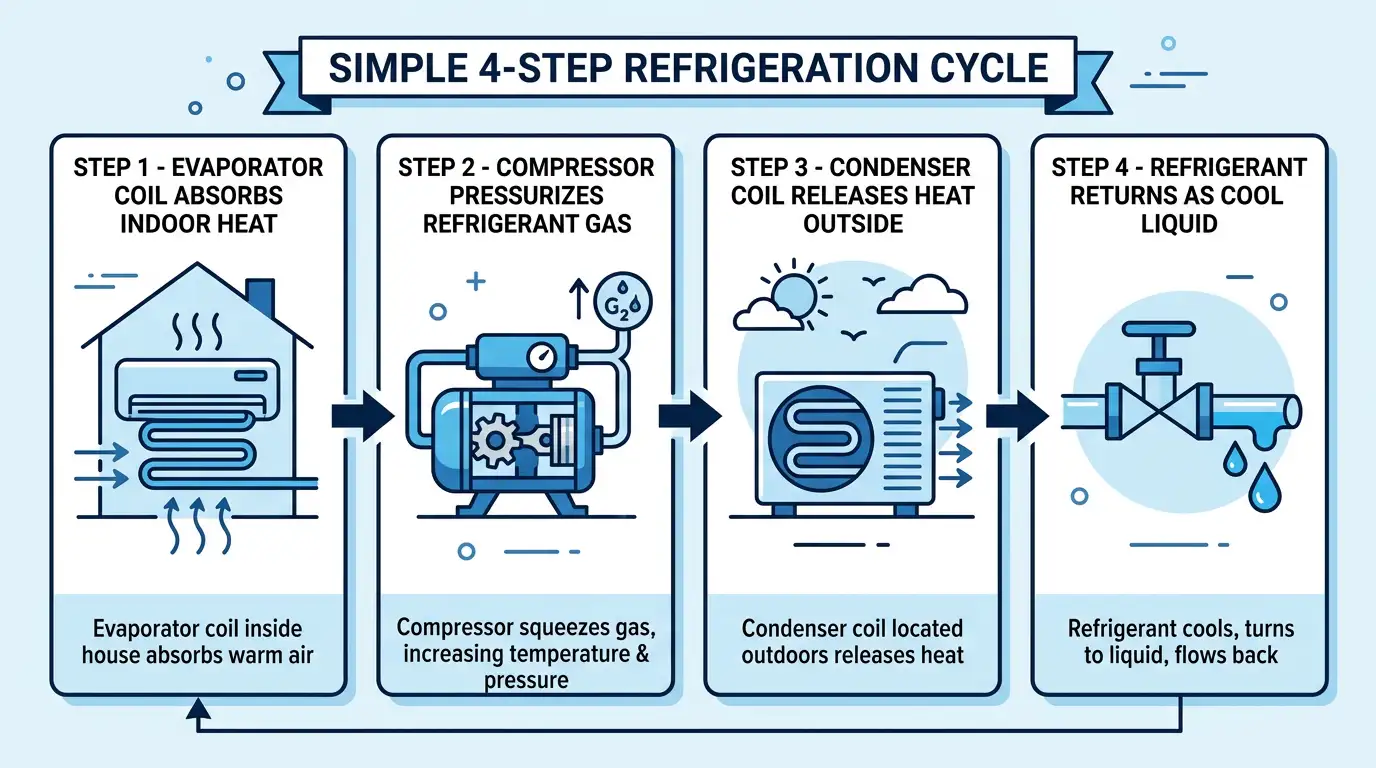
An AC condenser works by receiving hot refrigerant gas from indoors, pushing air across the condenser coil to strip away the heat, and converting that gas back into a cooled liquid refrigerant. This process repeats continuously as long as your AC runs. It’s a simple but precise cycle.
Here’s the step-by-step breakdown in plain language:
- Heat Absorption Indoors: The evaporator coil inside your home absorbs heat from indoor air. The liquid refrigerant turns into a gas as it absorbs that heat.
- Compression: The compressor (inside the outdoor unit) pressurizes that hot refrigerant gas, raising its temperature even higher.
- Heat Release Outdoors: The hot gas enters the condenser coil. The condenser fan blows outdoor air across those coils, stripping the heat away. This is where the aircon condenser facilitates heat transfer from the refrigerant to the outside environment.
- Back to Liquid: As the heat leaves, the refrigerant cools down and turns back into liquid refrigerant. It then travels back inside to absorb more heat, and the cycle repeats.
What is an AC Condenser Unit?
The AC condenser unit is the complete outdoor assembly that houses the condenser coil, compressor, fan, and refrigerant lines. It’s not just one part, it’s a system within a system. The refrigerant cycle runs well because of the way all the parts inside the outdoor cabinet operate together.
Here’s what’s inside a standard a/c condenser unit:
- Condenser Coil: A network of copper or aluminum tubing with fins. It’s the surface where heat from the refrigerant transfers to the outdoor air.
- Compressor: The engine of the whole operation. It pressurizes the refrigerant gas so heat can be expelled efficiently.
- Condenser Fan: Blows air across the coil to speed up heat dissipation. Without it, the coil would overheat.
- Refrigerant Lines: The tubes that carry refrigerant back and forth between the indoor and outdoor units.
The air cooled condensing unit design is the most common type in residential homes. It relies purely on outdoor air to cool the refrigerant, which is why proper airflow around the unit matters so much.
What is the Purpose of the AC Condenser Unit?
The purpose of the AC condenser unit is to remove heat from the refrigerant and release it outdoors, allowing the refrigerant to cool down and restart the indoor cooling process. Without a working condenser, your HVAC system cannot maintain a comfortable indoor environment. It’s the part that closes the loop.
A well-functioning hvac condenser does three key things:
- Keeps the refrigerant cycle working by maintaining proper pressure and temperature
- Protects the compressor from overheating by releasing built-up heat
- Determines how efficiently your whole air conditioning system performs
According to the U.S. Department of Energy, air conditioning accounts for about 12% of home energy costs. A properly maintained condenser can lower that figure noticeably.
Types of Heat Pump and HVAC Condensers
Not all condensers are built the same. Knowing the type you have helps you make better repair and replacement decisions.
Split System Condensers
This is what most homes have. The outdoor unit handles condensing while the indoor unit manages the evaporator coil. These are the most common air conditioner condensers in residential settings.
Packaged System Condensers
There is an outside unit that has everything, including the evaporator coil and air handler. These are great for homes when there isn’t much room for mechanical things inside.
Heat Pump Condensers
A heat pump condenser does double duty. In summer, it releases heat outdoors like a standard AC. In winter, it pulls heat from the outdoor air and brings it inside to warm your home. It runs the refrigeration cycle in both directions.
Heat pumps are up to 300% more energy-efficient than traditional electric heaters, according to the U.S. Department of Energy.
How Much is an AC Condenser?
It’s not inexpensive to replace an AC condenser, but you should know the complete cost before making any judgments.
On average, replacing an ac condenser unit costs between $1,500 and $4,500 for the unit and labor combined. High-efficiency models or larger units for bigger homes can push that figure higher.
Key cost factors include:
- Unit size: Measured in tons (2-ton, 3-ton, 4-ton, 5-ton). Bigger homes need bigger units.
- SEER2 rating: Higher efficiency ratings mean lower monthly energy bills but a higher upfront cost.
- Brand and model: Premium brands with better warranties cost more.
- Labor rates: Costs vary by region and contractor.
Signs Your AC Condenser is Going Bad
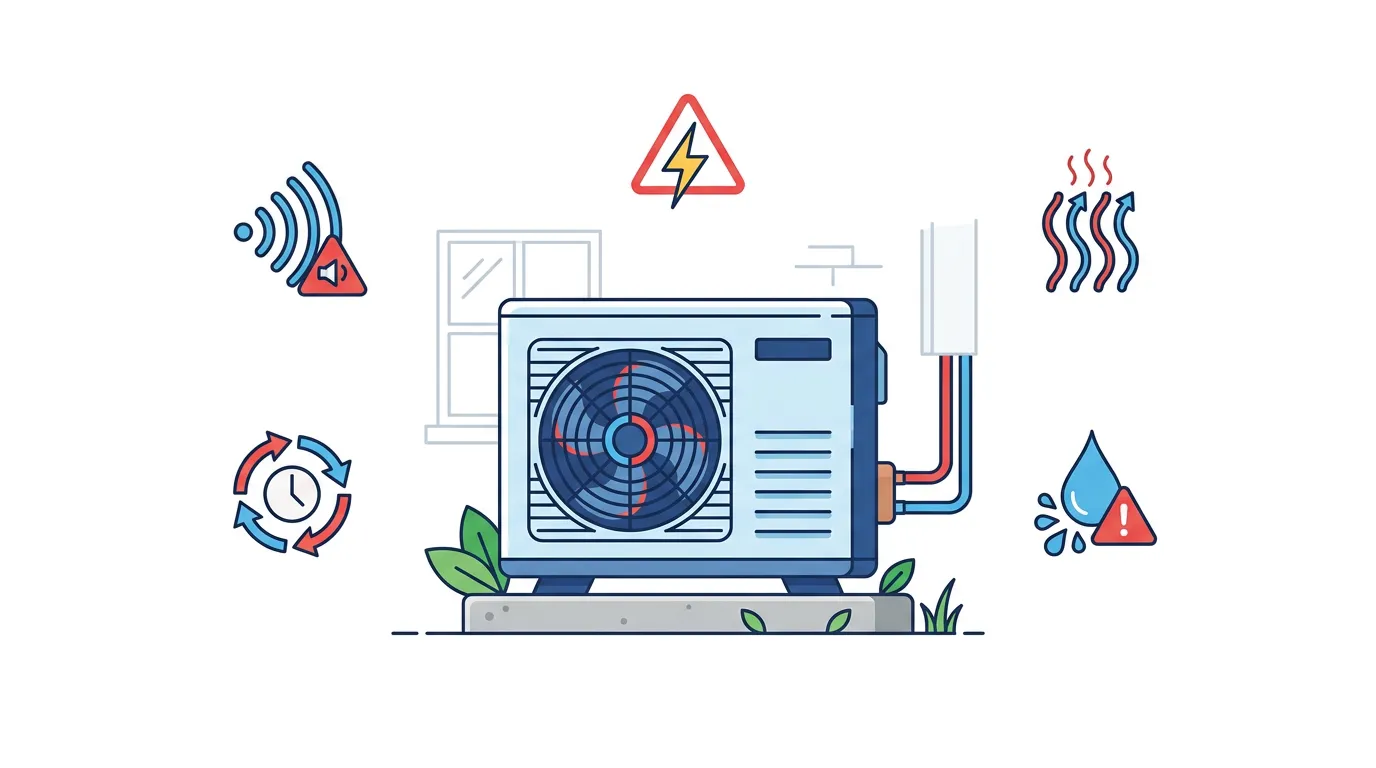
Catching condenser problems early saves you from a full breakdown in peak summer heat.
- Warm air blowing from vents: If your AC runs but only pushes warm air, the condenser isn’t releasing heat properly.
- Strange noises from the outdoor unit: Rattling, grinding, or banging usually points to a failing fan motor or loose components inside the condenser cabinet.
- Refrigerant leaks: Hissing sounds or oily residue near the unit can indicate refrigerant leaks in the condenser coil. This is a job for a licensed technician.
- Short cycling: If the AC turns on and off repeatedly without completing a full cooling cycle, the condenser may be overheating or struggling with pressure issues.
- Rising energy bills: A condenser working harder than it should pull more electricity. If your bills spike with no clear reason, get the outdoor unit inspected.
Tips for Maintaining an AC Condenser
A well-maintained condenser lasts 15 to 20 years. A neglected one? Much less.
- Keep the area clear. Trim back plants, shrubs, and debris within two feet of the unit. Blocked airflow forces the system to work harder.
- Clean the condenser coil once a year. Dirt and dust coat the fins and reduce heat transfer efficiency. A gentle rinse with a garden hose from the inside out works well for light buildup.
- Change your air filters regularly. Dirty filters restrict airflow across the evaporator coil, which puts indirect pressure on the condenser.
- Schedule an annual inspection. A licensed technician checks refrigerant levels, cleans the coil, inspects electrical connections, and tests performance before summer hits.
- Don’t block the top of the unit. The fan exhausts heat through the top. Placing anything on or above the unit traps that heat right back in.
How Do I Find the Right AC Condenser for My Home?
The right AC condenser depends on your home’s square footage, your local climate, and your budget. A unit that’s too small won’t cool your home effectively. One that’s too large short-cycles and wears out faster. Getting the sizing right from the start is the most important decision.
A few things to consider:
- Square footage: A licensed HVAC technician performs a Manual J load calculation to determine the correct tonnage for your home.
- SEER2 rating: Look for a minimum of 15 SEER2 for a balance between efficiency and cost.
- Brand warranty: A solid 10-year parts warranty is a good benchmark.
- Climate: Homes in hotter, more humid regions need units built to handle higher demand.
Ask your HVAC contractor to walk you through at least two or three options with different efficiency tiers. It’s your home and your money. You deserve a clear explanation, not just a quote.
Experiencing AC Issues? Get a Professional Condenser Inspection Today!
If your air conditioner isn’t working right, don’t wait until it stops working totally on a hot afternoon. Problems with the condenser don’t usually fix themselves, and little problems like unclean coils or refrigerant leakage can turn into expensive repairs if you don’t take care of them.
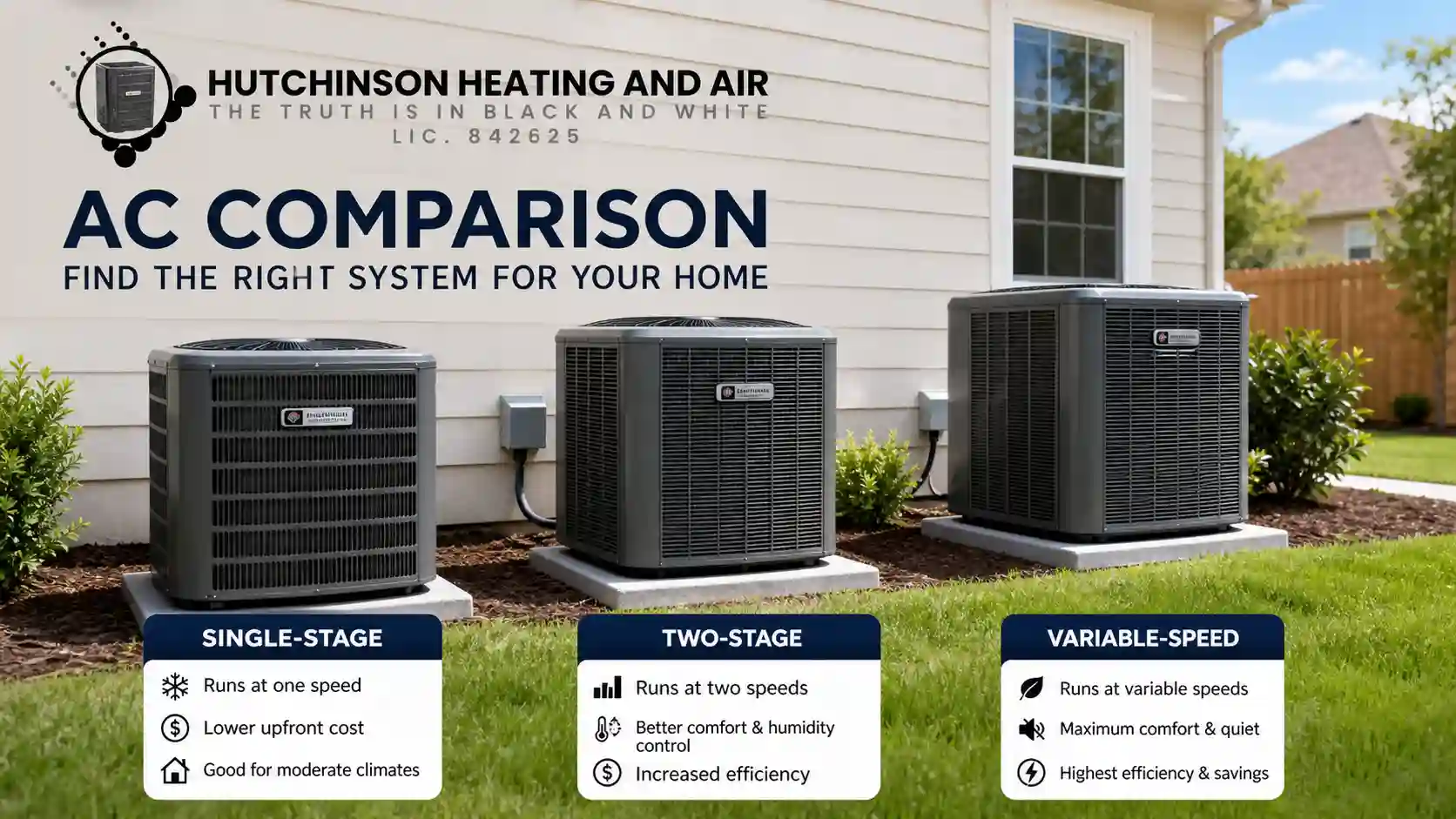
Hutchinson Heating and Air provides trusted AC maintenance and repair services in Temecula & Murrieta. Our team inspects your entire outdoor unit, checks refrigerant levels, cleans the condenser coil, and gives you a straight answer about what your system needs. No upsells, no guesswork.
Book your condenser inspection before the next heatwave hits. A quick check today can keep your system running all summer without a breakdown.
Final Thoughts
The aircon condenser is one of the hardest-working parts of your entire cooling system. It runs every time your AC runs, handles extreme outdoor temperatures, and keeps your home comfortable without you ever thinking about it until something goes wrong.
Now that you know what it does, how it works, and what warning signs to watch for, you’re in a much better position to catch problems early and make smart decisions about maintenance or replacement.
A well-maintained condenser is the difference between a cool home and a repair bill you didn’t budget for.
Whether it’s a failing aircon condenser or a complete system check, our expert HVAC team in Murrieta & Temecula is ready to assist you.
FAQs About AC Condensers
What is the outside AC unit called?
The outside AC unit is called the condenser or AC condenser unit. It houses the compressor, condenser coil, fan, and refrigerant lines. It’s the outdoor half of your split air conditioning system.
How long does an AC condenser last?
A well-maintained AC condenser typically lasts 15 to 20 years. Regular cleaning, annual inspections, and keeping the area around the unit clear are the biggest factors in extending its lifespan.
Can I run my AC if the condenser is not working?
Running your AC with a faulty condenser can damage the compressor, which is the most expensive component in the system. It’s best to shut the system off and call a technician as soon as you notice issues.
What is a condenser in an air conditioning system?
A condenser in an air conditioning system is the outdoor component responsible for releasing the heat absorbed from your indoor air. It cools the hot refrigerant gas back into a liquid so the cooling cycle can continue.
How often should the condenser coil be cleaned?
The condenser coil should be cleaned at least once a year, ideally before the cooling season starts. Heavy pollen, dust, or debris buildup may require cleaning more frequently depending on your environment.