When an air conditioner stops cooling properly, many homeowners quickly wonder whether the problem is with the compressor or the condenser. Understanding Condenser vs Compressor is important because it helps you make quicker and more accurate repair decisions while avoiding unnecessary expenses. In real HVAC situations, it is common to see people assume the entire system has failed when only one part is actually causing the issue.
At Hutchinson Heating and Air, we often explain this difference in simple terms during service visits so homeowners can easily understand what is happening inside their system. This guide will help you clearly learn how both components work and when professional help is needed.
Understanding the Difference Between a Condenser and Compressor
Quick Answer
The compressor vs condenser difference is simple:
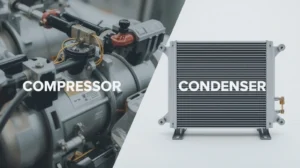
- The compressor pressurizes refrigerant and keeps it moving.
- The condenser removes heat from that refrigerant and releases it outside.
Both work together in a cycle, and without one, cooling cannot happen.
Why Homeowners Get Confused
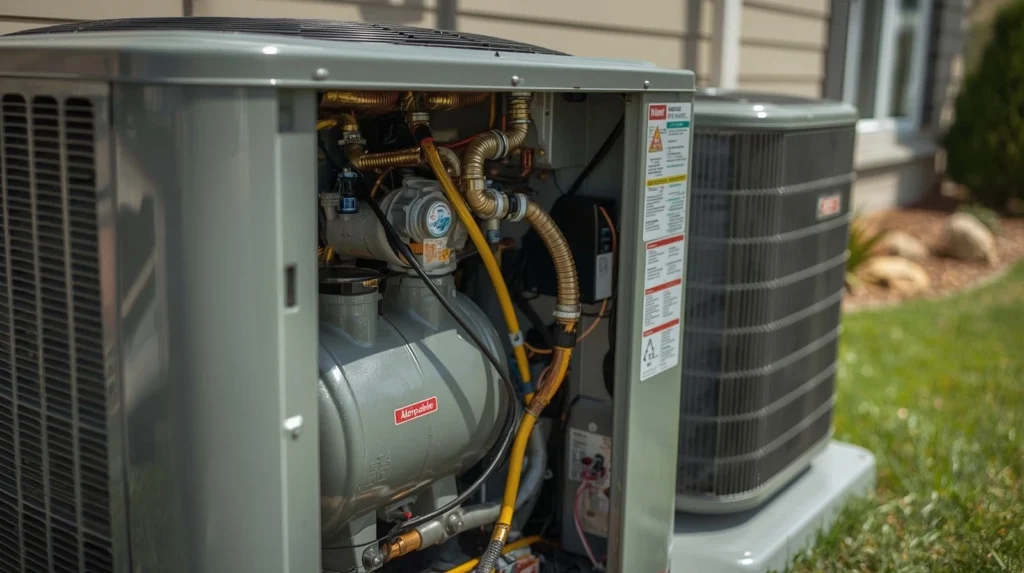
Most people see only the outdoor unit and assume it’s one part. In reality, it contains multiple components, including the condenser coil and fan system. The compressor may also be inside or connected depending on the AC type.
Role in the Cooling Cycle
The difference between condenser and compressor becomes clear when you look at the cooling cycle:
- Compressor starts the process
- Condenser completes heat removal
- Indoor unit distributes cool air
Without both working together, your AC cannot cool your home effectively.
What Is an AC Compressor?
How an AC Compressor Works
The compressor takes low-pressure refrigerant gas and compresses it into a high-pressure, high-temperature gas. This process is what allows the refrigerant to move through the system and carry heat.
Types of Air Conditioner Compressors
Common types include:
- Reciprocating compressors
- Scroll compressors
- Rotary compressors
- Inverter compressors
Each type affects efficiency and energy use differently.
Main Components of a Compressor
Inside a compressor, you typically find:
- Motor
- Pistons or scroll mechanism
- Valves
- Housing unit
Why the Compressor Is Called the Heart of the AC System
Without the compressor, refrigerant cannot circulate. That’s why technicians often call it the “heart” of the system.
The difference between a condenser and compressor becomes easier to understand when you realize the compressor’s job is movement and pressure, not cooling itself.
What Is an AC Condenser?
How an AC Condenser Works
The condenser receives hot, high-pressure refrigerant gas from the compressor and cools it down by releasing heat into the outdoor air.
Main Components of a Condenser Unit
- Condenser coil
- Fan motor
- Fins
- Refrigerant lines
Types of AC Condensers
- Air-cooled condenser
- Water-cooled condenser
- Split system condenser
Why the Condenser Is Essential for Heat Removal
The condenser is responsible for releasing indoor heat outside. Without it, your home would continuously heat up instead of cooling down.
This is where the condenser and compressor work as a team rather than separate parts.
Compressor vs Condenser: Key Differences Explained
| Feature | Compressor | Condenser |
| Purpose | Pressurizes refrigerant | Removes heat |
| Location | Outdoor/inside unit depending system | Outdoor unit |
| Function | Circulates refrigerant | Releases heat |
| Cooling Role | Indirect | Direct heat rejection |
| Energy Use | High | Moderate |
| Repair Cost | Higher | Moderate |
| Lifespan | 10–15 years | 12–20 years |
| Maintenance | Electrical checks | Coil cleaning |
The compressor vs condenser comparison shows clearly that both serve different but connected roles.
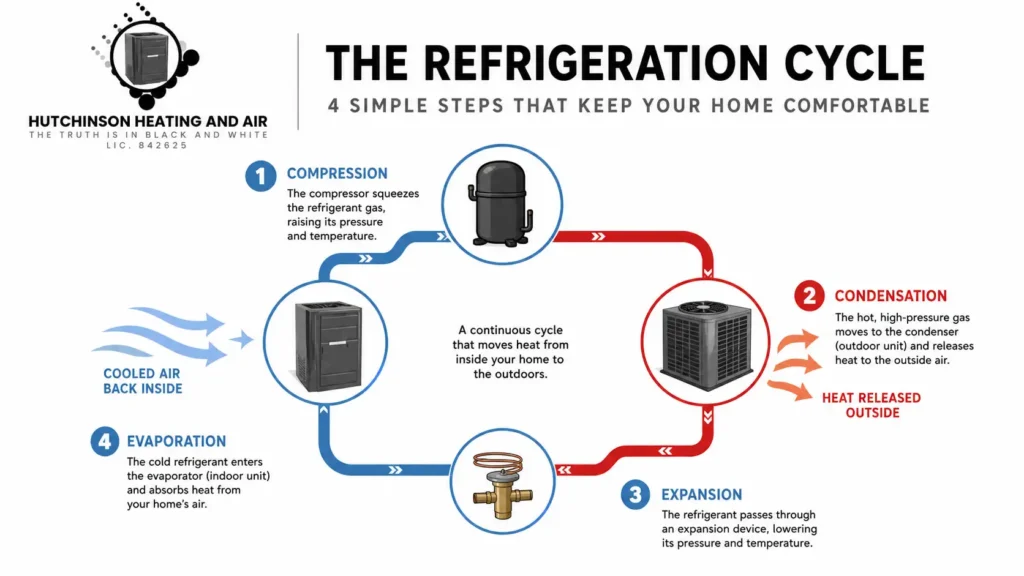
How the Compressor and Condenser Work Together
Step 1: Refrigerant Compression
The compressor compresses refrigerant into a hot gas.
Step 2: Heat Transfer to the Condenser
This hot gas moves into the condenser unit.
Step 3: Heat Release Outdoors
The condenser fan blows air over coils, releasing heat outside.
Step 4: Refrigerant Cooling and Recirculation
The refrigerant cools down and cycles back indoors.
This continuous loop defines the entire air conditioning process.
Which Component Actually Cools Your Home?
The Compressor’s Contribution
It keeps refrigerants moving and maintains system pressure.
The Condenser’s Contribution
It removes heat from the refrigerant.
Why Both Are Equally Important
If either fails, cooling stops completely. That’s why the difference between condenser and compressor is not about importance but function.
Signs of a Bad AC Compressor
Want to Learn More About AC Compressors?
Dive deeper into how your AC compressor works, its types, and maintenance tips in our detailed guide.
Warm Air Coming From Vents
The air blows but doesn’t cool.
Unusual Noises
Clicking or grinding sounds may indicate internal damage.
Hard Starting Problems
AC struggles to turn on.
Tripped Circuit Breaker
Electrical overload is a common symptom.
Compressor Failure
Complete shutdown of cooling cycle.
These issues often require professional AC Repair Murrieta and Temecula services for proper diagnosis.
Want to Learn More About AC Condenser?
Discover the role of the AC condenser, how it functions, and tips to keep it running efficiently in our detailed guide.
Signs of a Bad AC Condenser
Reduced Cooling Performance
Home takes longer to cool.
Outdoor Unit Overheating
Poor heat release causes stress on the system.
Damaged Condenser Coils
Dirt or physical damage reduces efficiency.
Fan Motor Issues
Weak airflow affects heat exchange.
Increased Energy Bills
The system works harder to maintain cooling.
Compressor vs Condenser Repair and Replacement Costs
Compressor Repair Costs
Usually higher due to internal complexity.
Compressor Replacement Costs
Often expensive and sometimes leads to full system replacement.
Condenser Repair Costs
Moderate depending on coil or fan issues.
Condenser Replacement Costs
Less than a compressor in many cases.
Which Component Is More Expensive?
Generally, compressor replacement costs more due to labor and part complexity.
Compressor vs Condenser Lifespan
Average Compressor Lifespan
10–15 years with proper maintenance.
Average Condenser Lifespan
12–20 years depending on the environment.
Factors That Affect Service Life
- Maintenance quality
- Dust and dirt exposure
- Electrical stability
- Refrigerant levels
Can You Replace a Condenser Without Replacing the Compressor?
When It Is Possible
If the compressor is still healthy and compatible.
Compatibility Considerations
Both parts must match system specifications.
Refrigerant Matching Requirements
Incorrect matching reduces efficiency.
Professional HVAC Recommendations
Technicians usually inspect both before replacement decisions.
How to Prevent Condenser and Compressor Failures
Change Air Filters Regularly
Prevents system overload.
Keep Condenser Coils Clean
Improves heat transfer.
Schedule Annual HVAC Maintenance
Helps detect early issues.
Monitor Refrigerant Levels
Avoids system strain.
Inspect Electrical Connections
Prevents sudden failures.
Regular service like AC Repair Murrieta and Temecula helps extend system life.
Compressor vs Condenser : Which Is More Important?
Both are essential. The compressor starts the process, and the condenser completes it. In real HVAC systems, neither can function without the other.
From field experience at Hutchinson Heating and Air, most breakdowns happen when one component is stressed due to neglect of the other.
Conclusion
Understanding Condenser vs Compressor helps you make better decisions when your AC system shows problems. The difference between condenser and compressor is simple in theory but very important in real HVAC performance.
If your system is not cooling properly, don’t guess the problem. Professional diagnosis saves time and money. At Hutchinson Heating and Air, we help homeowners identify whether the issue is related to the compressor or condenser and provide the right repair solution without unnecessary replacements.
For reliable service and fast diagnosis, Contact Us today for expert HVAC help and get your cooling system back to peak performance.
Keep Your Compressor & Condenser in Peak Condition
Ensure your AC runs efficiently all year round. Call now or book your professional maintenance service today!
Frequently Asked Questions
Is the compressor located inside the condenser unit?
In many split systems, the compressor is located in the outdoor unit along with the condenser, but they are separate components.
What happens when a condenser fails?
Your AC will lose cooling efficiency because heat cannot be released properly.
Can an AC run with a bad compressor?
No, without a working compressor, refrigerant cannot circulate.
Which costs more to replace, a condenser or compressor?
Usually, compressor replacement is more expensive due to complexity.
How can I tell if my compressor or condenser is bad?
Warm air, noise, or overheating are common signs. A technician can confirm the exact issue.